


Maintaining Relationships

Maintaining Relationships
Relationships stay alive through small, repeated moments of attention. Maintenance is not constant contact — it is the shared practice of remembering, responding, repairing and making room for changing lives.
Strong relationships are maintained, not assumed.
Caring about someone does not automatically keep a relationship connected.
Busy seasons, neurodivergence, illness, caregiving, distance and stress can all change how often people connect.
A quieter relationship is not automatically a failed one, but relying entirely on spontaneity can allow valued connections to slowly disappear.
What helps relationships last?
Healthy relationships usually stay connected through small behaviours repeated over time.
Keep Connection Visible
A realistic pattern of messages, calls or time together keeps the relationship present in everyday life.
Let Contact Move Both Ways
Responsibility for staying connected should not remain permanently with one person.
Keep Knowing Each Other
Follow up on what matters and remain interested in one another’s changing lives, needs and experiences.
Return After Strain
Misunderstandings and absences can be named without turning every rupture into the end of the relationship.

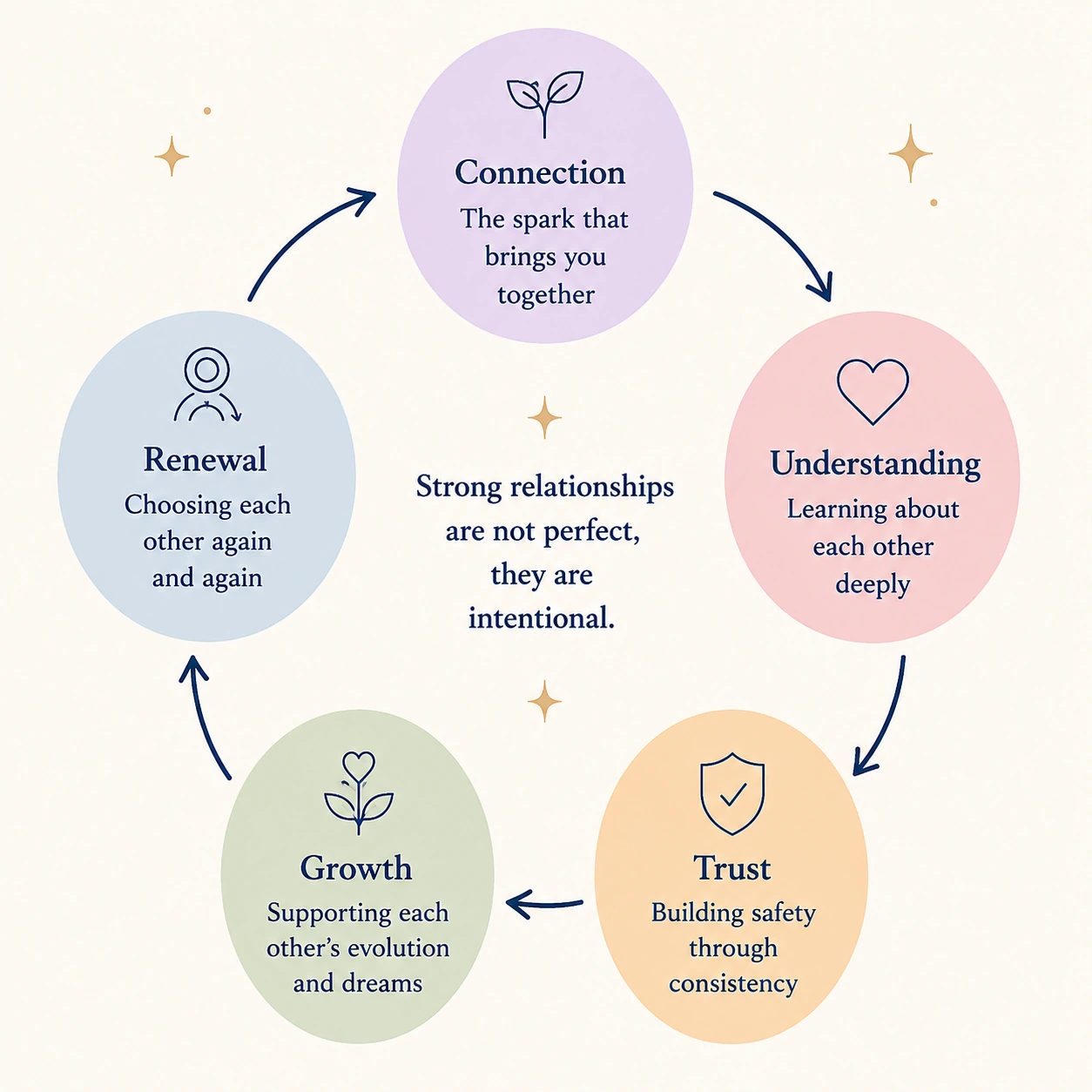
Healthy connection is an ongoing cycle.
Connection creates understanding. Understanding supports trust. Trust allows growth — and healthy relationships continue to renew as people and circumstances change.
Ways to stay in touch.
- Send a short message when something reminds you of them.
- Create a recurring monthly call, walk or shared meal.
- Use voice notes when live conversation is difficult to schedule.
- Share ordinary moments instead of waiting for important news.
- Keep a reminder to follow up after a significant event.
- Plan lower-energy options for periods of reduced capacity.
Carrying the relationship alone.
- Always initiating while the other person never responds.
- Ignoring disrespect to preserve history or avoid loneliness.
- Being available at every moment to prove that you care.
- Keeping every relationship at the same level of closeness.
- Accepting guilt or punishment when your capacity changes.
- Doing all the emotional work after every conflict.
Reconnect after time or distance.
You do not need a perfect explanation before reaching out.
Reach Out Honestly
Acknowledge the gap without creating a long defence or demanding reassurance.
Show Interest
Ask what life has been like and listen for what has changed.
Name What Is Possible
Suggest a manageable way to reconnect that respects both people’s capacity.
Watch for Reciprocity
Let the response show whether both people want to rebuild the rhythm.
Not every change is rejection.
Some relationships become closer, quieter or more occasional over time.
You can value what a connection has been while honestly deciding what it can be now.
Maintenance includes adjusting expectations — not forcing every bond to remain unchanged.
Relationships need enough mutuality to stay alive.
Perfect balance is not required, but one person should not permanently carry all of the contact, repair and emotional effort.
There may be seasons when one person has less capacity and the other does more. What matters is whether, across time, both people show some willingness to participate in the relationship.

Choose one relationship to tend.
- Which relationship matters to me but has become quieter?
- Is reduced contact about lack of care, or simply reduced capacity?
- Do both of us initiate and respond over time?
- What small ritual could make connection easier to maintain?
- Is there unresolved strain that needs an honest conversation?
- Does this relationship need more contact, less pressure or simply different expectations?
Connection does not need perfection.
A small, genuine act of contact can matter more than waiting until you have the perfect amount of time, energy or words.