


Body-Based Regulation

Body-Based Regulation
Sometimes thinking harder is not what helps. Gentle changes in movement, breath, sensory input, orientation and physical comfort may help you reconnect with the present moment.
Regulation does not have to mean sitting perfectly still and breathing deeply.
Different nervous-system states may respond to different kinds of support.
When you feel activated, your body may want movement. When you feel overwhelmed, you may need less input. When you feel disconnected, gentle sensory contact or orientation to your surroundings may be easier than trying to think your way back.
The aim is not to force your body into a particular state. It is to experiment gently and notice what helps you feel a little more present, supported or able to choose what happens next.
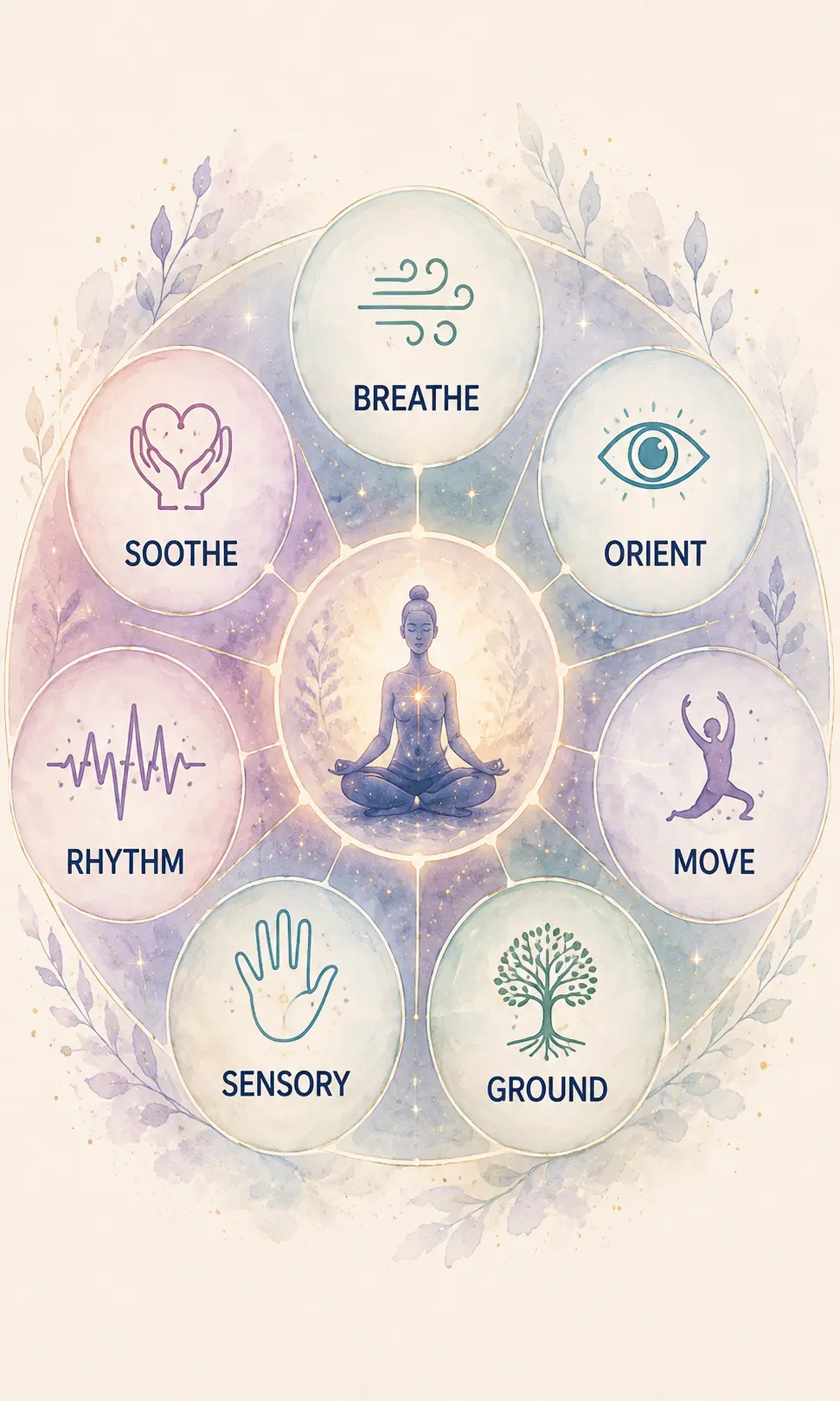
There is more than one way back to the body.
Start with the approach that feels least demanding. You do not need to use all of them.
Notice the breath before changing it.
Begin by noticing whether your breathing feels fast, shallow, held, uneven or comfortable.
Let your senses find the present.
Slowly notice the room, light, sounds, objects and the physical space around you.
Give mobilisation somewhere to go.
Walking, stretching, shaking out your hands or changing position may feel more supportive than forced stillness.
Notice physical contact and support.
Feel the floor beneath your feet, the chair supporting you or another stable surface.
Change the amount or type of input.
You may need quieter sound, softer light, warmth, cool air, texture or less stimulation.
Use predictable repetition.
Walking, rocking, tapping, music or another comfortable rhythm may help create structure.
Add comfort rather than demanding performance.
A blanket, warm drink, comfortable clothing, supportive touch or simply reducing demand may help.
Start with the state, not the technique.
Choose anything that feels true right now. Your suggestions will appear underneath.
There is no correct regulation technique.
Sometimes the most regulating thing is doing less.
If you are already overloaded, adding a complicated routine can become another demand.
Turn something down, off or away.
Do the easier version of what needs to happen.
Sit, lie down, stand, stretch or move somewhere more comfortable.
Not every problem needs to be resolved at peak activation.
Food, water, temperature, toileting, medication or rest may matter first.

Regulation does not always feel like instant calm.
Often the shift is smaller: a little more space, a little less urgency or a little more ability to notice what you need.
More awareness
You can notice sensations or emotions without immediately reacting to them.
More choice
You feel slightly more able to decide whether to speak, pause, move or wait.
Less urgency
The situation may still matter, but it no longer feels like everything must happen immediately.
Greater presence
You feel more connected to your body, surroundings or the person in front of you.
A regulation practice should not be something you have to endure.
Some practices can feel uncomfortable or activating for some people. If focusing on your breath, closing your eyes, staying still, body scanning or a particular sensory technique makes you feel worse, stop and choose another approach.
You are allowed to regulate through movement, space, practical support and environmental change — not only through inward-focused exercises.
Choose what fits the state you noticed.
You do not need to force yourself back to calm.
Find one form of support your body can actually receive.