


Circle of Connection

Circle of Connection
Not everybody needs the same access to your time, energy and inner world. Healthy connection allows closeness to grow alongside trust.
Different relationships can hold different parts of your life.
Connection is not simply a choice between having a best friend and being alone.
A healthy social world can include intimate relationships, trusted friends, familiar people, neighbours, colleagues, shared-interest communities and people we know only lightly.
A neighbour may offer everyday friendliness. A colleague may understand your work. A close friend may hold vulnerable parts of your story. Each connection can be valuable without becoming everything.
Not every relationship needs the same level of closeness.
Your relationship with yourself sits at the centre. Around it are different layers of connection, each with its own place and purpose.
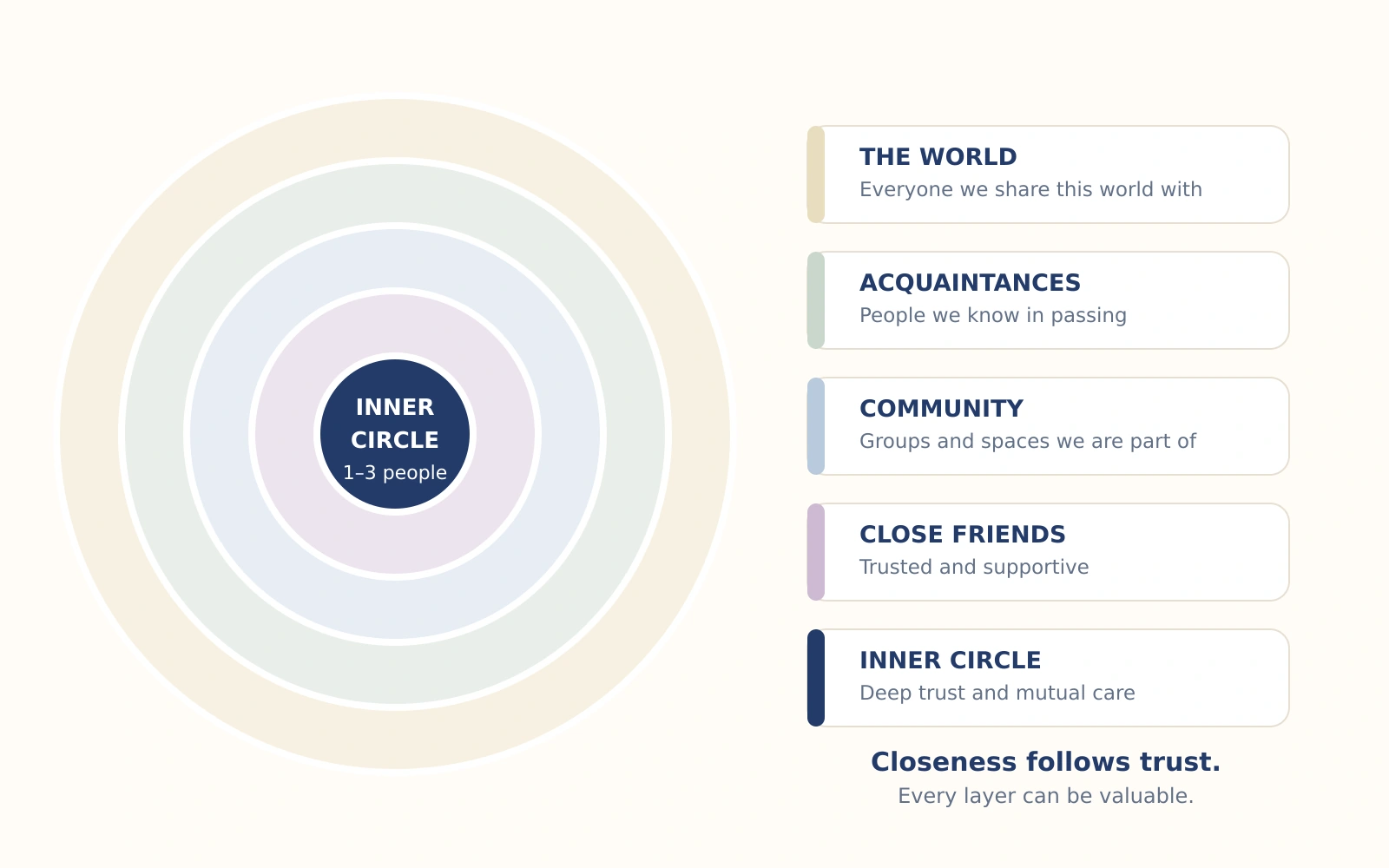
Each circle can contribute something different.
You
Your relationship with yourself is the centre of your circle. Self-trust, self-respect and knowing your own needs influence every other relationship.
People You Can Be Vulnerable With
These are the few people who have demonstrated safety, consistency and care over time. They may know your vulnerable experiences and be involved in important parts of your life.
People You Enjoy and Trust
Friends can hold meaningful parts of your life without needing access to everything. There can be warmth, reliability and mutual support without complete emotional intimacy.
People You Share Interests or Values With
Work, neighbourhoods, hobbies, learning, volunteering, faith and shared interests can all provide familiarity, identity and belonging.

Healthy boundaries are not always about keeping people out.
Sometimes the work is creating more distance. Sometimes it is allowing safe people a little closer.
When everyone is placed too close
Sharing deeply before trust has formed can leave you exposed, disappointed or attached to people who have not yet shown they can safely hold your vulnerability.
Fast intimacy can feel powerful, but intensity is not evidence of safety.
You are allowed to slow the pace, keep information private and observe how someone handles small boundaries before offering more access.
When everyone is kept at a distance
If past closeness was unsafe, distance may feel like the only reliable boundary.
But placing every person in the outer circle can leave you protected and profoundly alone.
Healing may involve allowing one trustworthy person a little closer — not removing every boundary, but discovering whether safe connection is possible.
Trust is built gradually.
People move closer through consistent behaviour — not pressure, titles, promises or intensity.
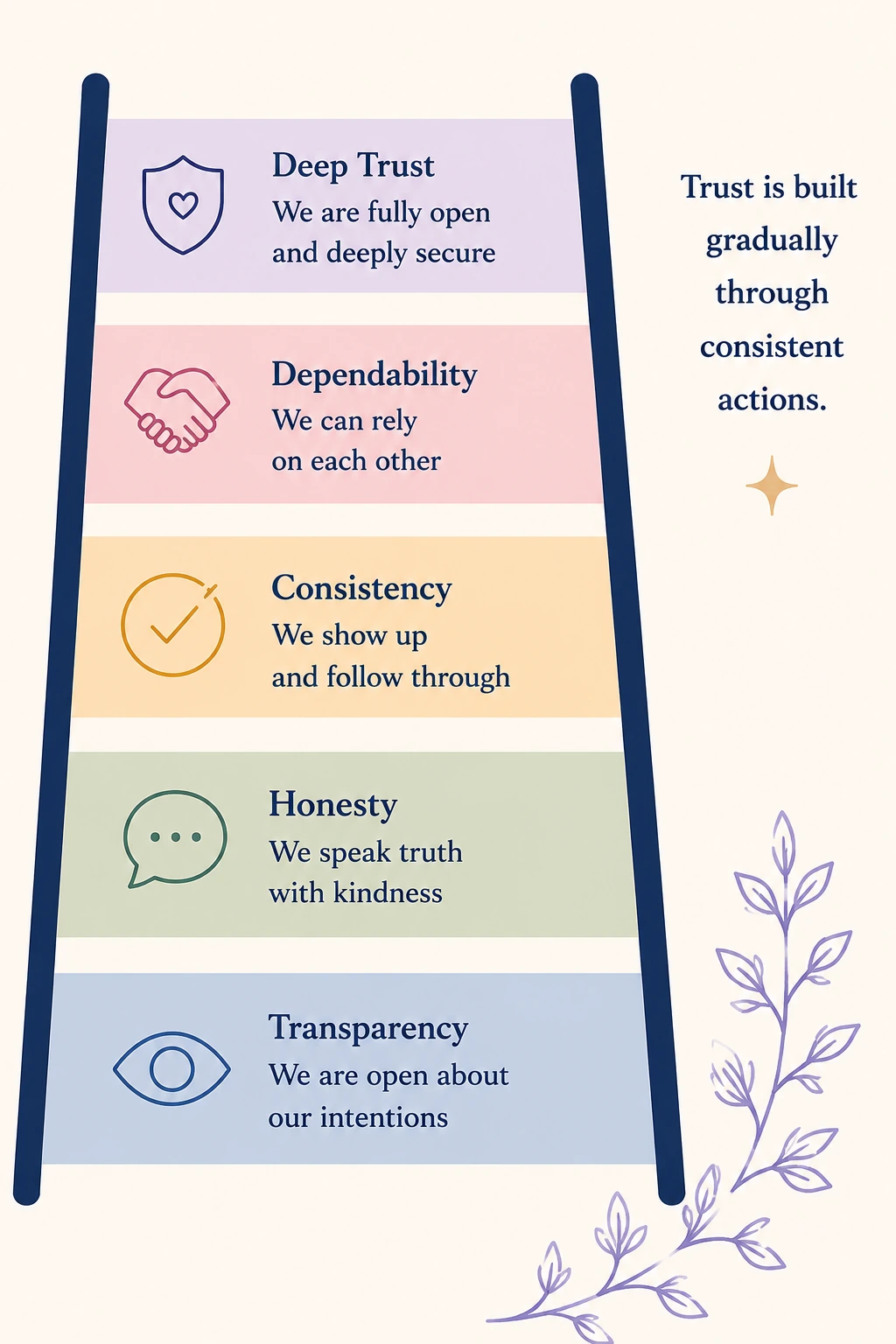
What helps someone move closer?
Trust tends to grow from patterns, not one impressive moment.
Consistency
Their behaviour is reasonably stable across time and situations.
Respect
They accept your boundaries, differences and right to make your own decisions.
Reciprocity
Interest, care, vulnerability and effort move in both directions.
Confidentiality
They handle personal information with discretion rather than using it for status or leverage.
Accountability
They can acknowledge harm, apologise meaningfully and change behaviour.
Emotional Safety
You can be honest without being mocked, punished, controlled or deliberately confused.

Map your circle.
You do not need to move everybody. Start by noticing whether your current circles reflect the trust that has actually been earned.
- Who has consistently earned a place in my close circle?
- Have I placed anyone too close because of history, obligation or intensity?
- Have I kept safe people too far away because closeness feels unfamiliar?
- Which lighter connections already add warmth or belonging to my life?
- Who may need more, less or simply different access to me?
Your circles are allowed to change.
New information, behaviour and life changes can alter how much access a relationship can safely hold. You do not owe permanent closeness because someone once occupied an important role.