


Connection Across Life

Connection Across Life
Connection is not a fixed achievement. Relationships change as we change, and every season of life asks us to find, release, repair or reshape connection.
Connection is a journey.
Our need for connection remains, but the form it takes changes throughout life.
Childhood families, school friends, partners, colleagues, neighbours, communities and chosen family may each matter deeply in different chapters.
Some relationships travel with us for decades. Others are meaningful for a season. An ending does not automatically make the connection false or the time shared wasted.
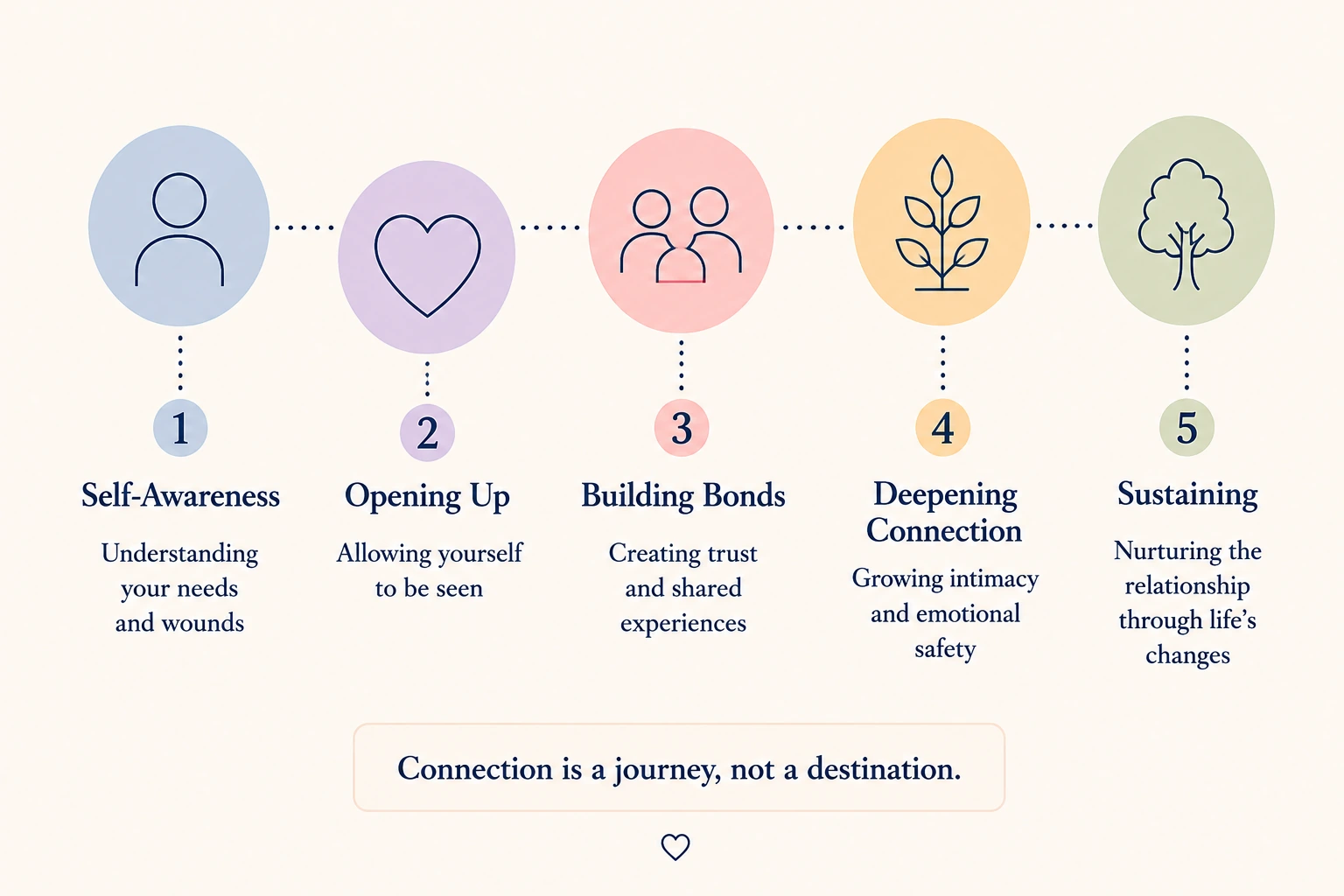
Connection develops through experience.
We begin by understanding ourselves, gradually open to others, build bonds, deepen connection and learn how to sustain it.
Life transitions reshape connection.
Changes in circumstances can alter who we see, what we need and how much capacity we have for relationships.
Moving or Changing Work
Familiar contact disappears and new relationships require energy and repetition. Loneliness during transition does not mean you have failed.
Partnership and Separation
Relationships can merge social worlds or divide them. Maintaining individual connections can help protect identity through change.
Parenthood and Caregiving
Capacity, routines and priorities shift. Support may need to become more practical, flexible and intentional.
Illness, Burnout or Grief
Energy may reduce and some people may not know how to respond. Fewer, safer connections may matter more than maintaining a large social circle.
Changing Values
As you understand yourself, relationships based on old roles may feel strained. Growth can require renegotiating what connection looks like.
Later Life
Retirement, loss and changing health can alter networks. Purposeful community and intergenerational connection can become especially valuable.

When a relationship changes
Before deciding that a connection is over, consider whether it needs a different shape.
The relationship may need clearer boundaries, less frequent contact, a direct conversation, new expectations or simply time to adjust.
It is also valid to recognise when repeated harm, incompatibility or lack of reciprocity means continued closeness is no longer healthy.
Making room for grief
We can grieve people who are still alive, versions of relationships that no longer exist and communities where we once belonged.
Grief is not proof that a boundary or ending was wrong.
Honouring what mattered can coexist with accepting what the relationship can — or cannot — be now.
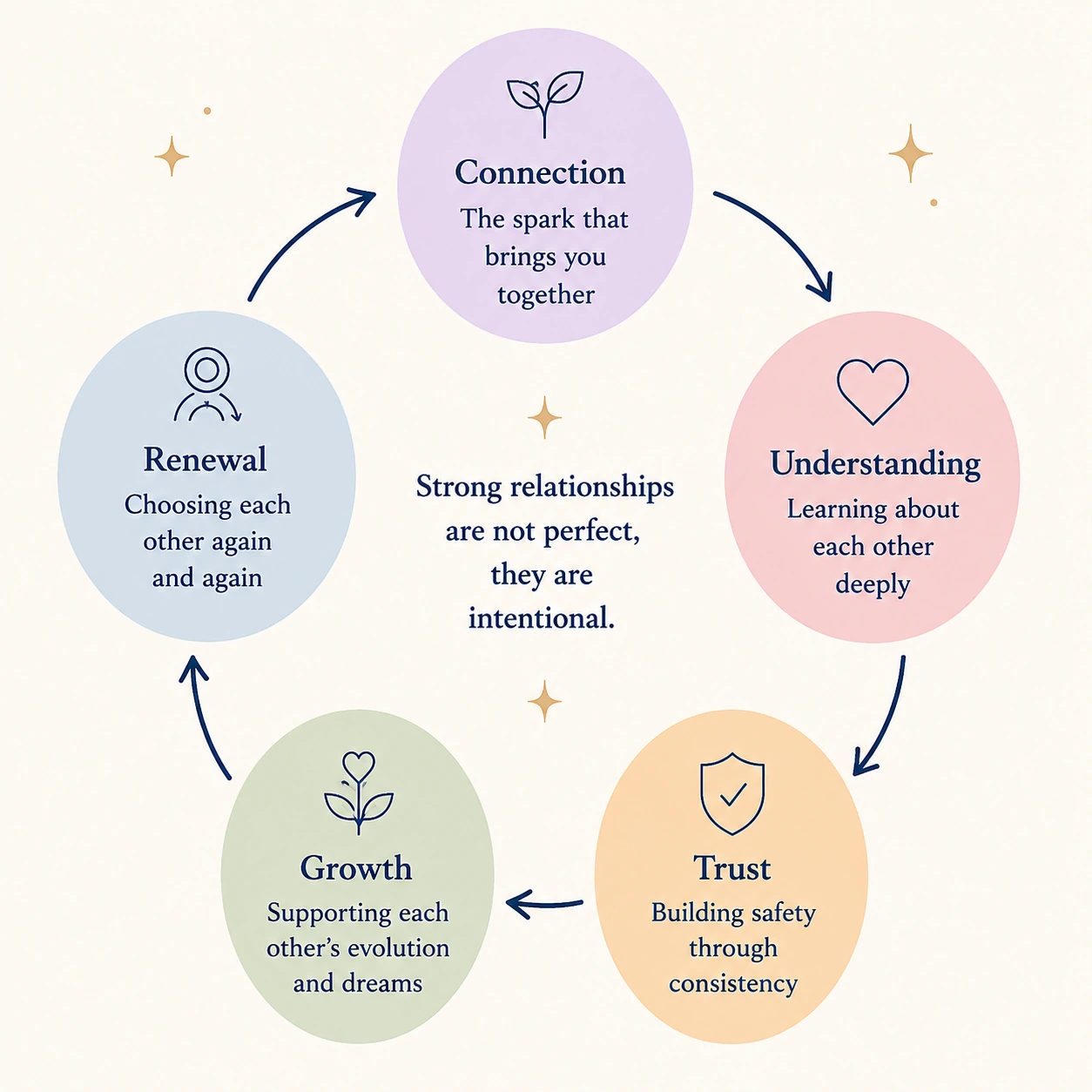
Healthy connection is not static.
Connection, understanding, trust, growth and renewal continue to influence one another as people and circumstances change.
Repair keeps connection alive.
Conflict is not automatically a sign of an unhealthy relationship.
A stronger indicator is what happens next. Can both people listen, acknowledge impact, take responsibility and make meaningful changes?
Repair does not mean pretending nothing happened. It means using honesty and action to rebuild enough safety for connection to continue.

Your connection timeline.
Think about the people and communities that have travelled through different chapters of your life.
- Which relationships have shaped different chapters of my life?
- What connection am I grieving, even if the person is still present?
- Which relationship needs repair, a new boundary or a new shape?
- Where have I outgrown a role I once played?
- Which relationships still feel reciprocal, safe and alive?
- What kind of connection fits the life I am building now?
Change does not automatically mean failure.
Relationships can evolve, repair or end. If a relationship involves fear, coercion, threats or abuse, ordinary communication and repair strategies may not be safe. Prioritise your safety and seek appropriate specialist support.