


Understanding Attachment
Understanding Attachment
Attachment patterns are ways we learned to manage closeness, safety and separation. They can explain our reactions, but they do not define who we are or what our relationships must become.
What attachment means
Our earliest relationships help shape what we expect from connection. When care is reasonably consistent and responsive, we learn that people can be trusted and that needs can be expressed. When care is inconsistent, distant, frightening or unpredictable, we adapt.
Those adaptations may later appear in adult relationships as fear of abandonment, difficulty trusting, discomfort with dependence, emotional withdrawal or a confusing mixture of wanting closeness and fearing it.
Attachment Styles at a Glance
Most people are not one fixed style in every relationship. Patterns can vary with stress, history and the person we are with.
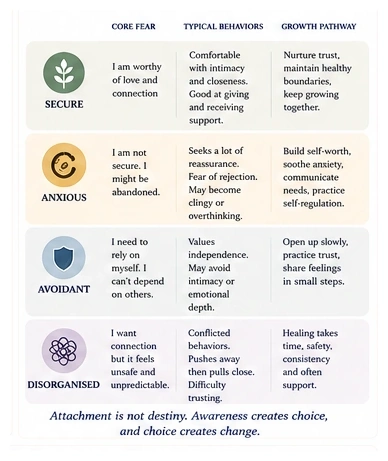
Secure
Closeness and independence can coexist. Needs and boundaries can usually be expressed, and conflict does not automatically mean the relationship is ending.
Anxious
Distance or uncertainty may activate fear of rejection. You may seek reassurance, overthink changes in tone or work hard to restore closeness.
Avoidant
Dependence may feel unsafe or uncomfortable. You may minimise needs, pull away during emotion or feel safer when you remain self-contained.
Disorganised
Closeness may be deeply wanted and deeply frightening. You may move toward connection and then withdraw when vulnerability activates threat.
How patterns appear
Attachment is often most visible when something feels uncertain: a delayed reply, conflict, emotional distance, a request for commitment or the possibility of rejection. The nervous system may react before the thinking mind understands why.
Instead of asking, “What is wrong with me?” try asking, “What does this reaction believe is about to happen?”
Attachment is not destiny
People can develop greater security through self-awareness, emotional regulation, consistent relationships, clear boundaries, repair after conflict and professional support where needed.
“Earned secure attachment” describes security built through later experiences, even when early relationships were difficult.
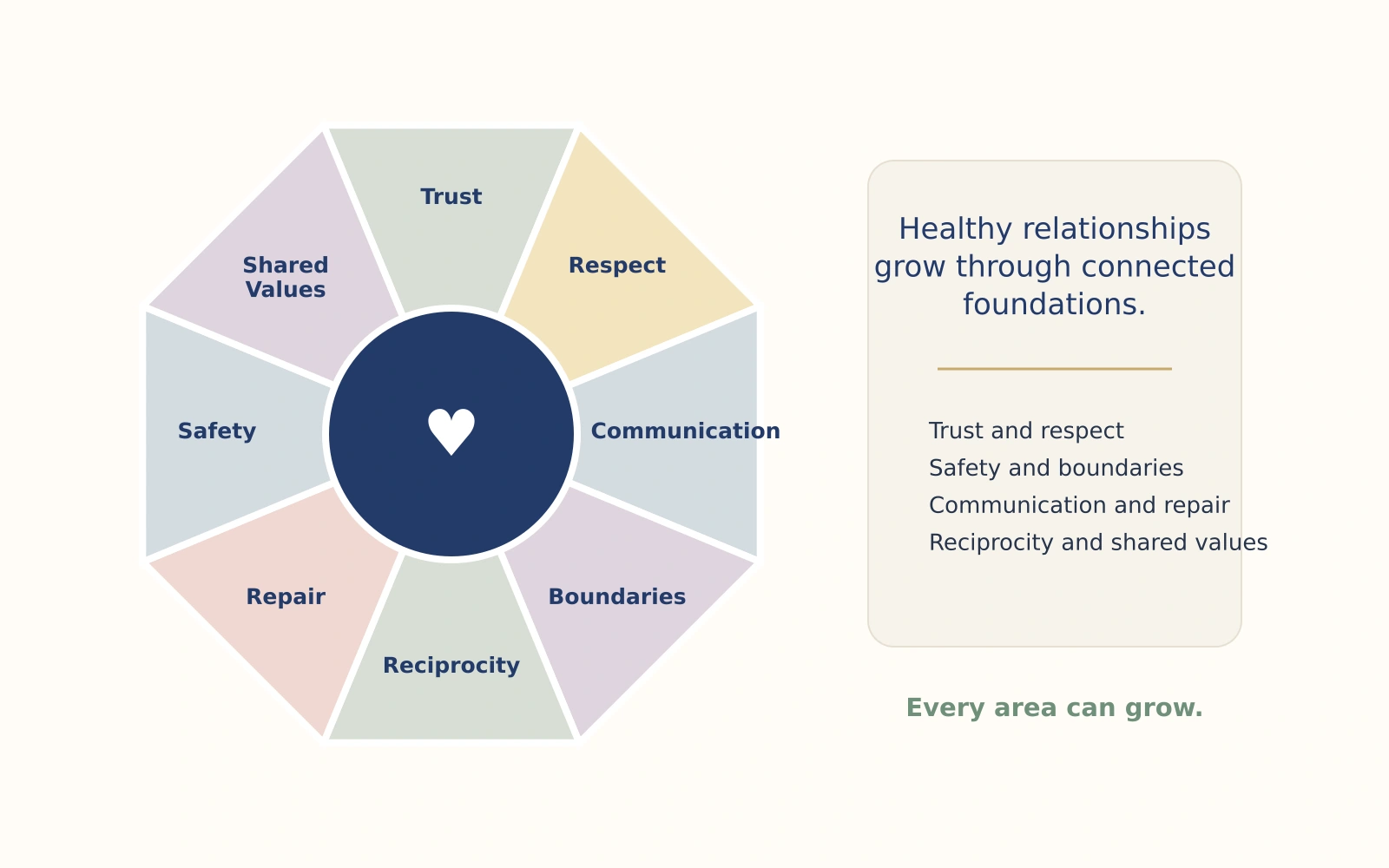
The Relationship Health Wheel
Security grows through trust, respect, communication, boundaries, reciprocity, repair, safety and shared values.
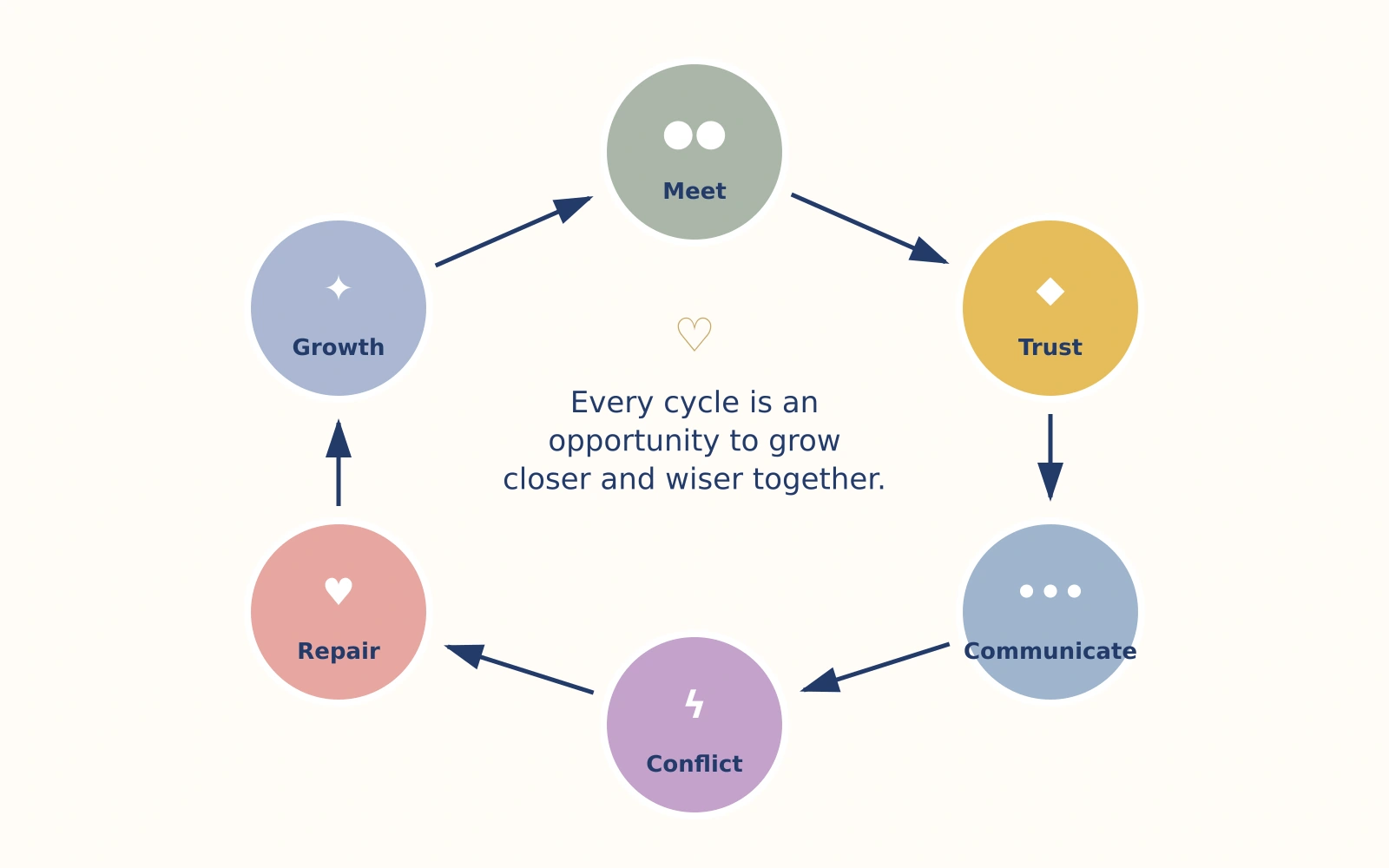
The Relationship Growth Cycle
Healthy relationships are not conflict-free. They become stronger through communication and repair.
Building more secure connection
Name the activation
Pause and identify the fear beneath the reaction: abandonment, engulfment, rejection, loss of control or being misunderstood.
Regulate before reacting
Give your body time to settle before sending the message, withdrawing completely or making a permanent decision.
Communicate the need
Replace testing, guessing or disappearing with a clear statement: “I’m feeling uncertain and would value some reassurance.”
Watch for consistency
Choose people whose actions are reliable, whose words and behaviour align, and who can take responsibility after harm.
Keep your boundaries
Security does not require tolerating mistreatment. Boundaries protect connection by making expectations and limits visible.
Practise repair
Misunderstandings happen. Repair includes listening, accountability, changed behaviour and rebuilding trust through action.
Your attachment reflection
- What happens inside me when someone becomes distant?
- What happens when someone wants more closeness from me?
- Which needs are hardest for me to express directly?
- What behaviours help me feel secure—and which create confusion?
- What would one more secure response look like next time I feel activated?
You have explored the foundations of human connection
Connection begins with understanding what you need, where you belong and how your protective patterns shape closeness.
Return to Connect →