


Why Humans Need Connection
Why Humans Need Connection
Connection is not an optional extra. It is a biological, emotional and psychological need that helps us feel safe, understood and part of something larger than ourselves.
We are wired for connection
From our earliest moments, we depend on other people for safety, care and survival. Our brains and nervous systems develop through relationship. Being seen, soothed and responded to teaches the body that the world can be safe and that our needs matter.
That need does not disappear in adulthood. Healthy connection helps regulate stress, strengthens resilience and gives us somewhere to bring our joy, fear, uncertainty and growth. We may become more independent, but we never stop needing to belong.
The Four Connections of a Healthy Life
Wellbeing is supported by connection with self, others, community and purpose.
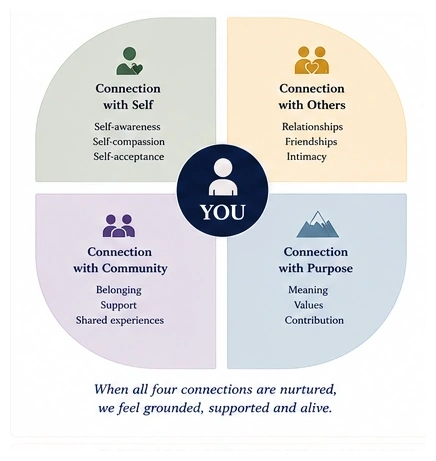
Connection with self
Knowing what you feel, need, value and believe. It allows you to hear your own voice instead of constantly looking outside yourself for direction.
Connection with others
Relationships where you can be known, supported and accepted without having to earn your place through performance or self-abandonment.
Connection with community
A sense that you are part of a group, place or shared experience. Community reminds us that we are not carrying life alone.
Connection with purpose
Meaning, contribution, faith, creativity or values that connect your everyday life to something that matters deeply to you.
Connection and the nervous system
A calm, trustworthy presence can help the nervous system move out of threat. A safe conversation, gentle eye contact, shared laughter or simply sitting beside someone can signal: I am not alone. I do not have to manage everything by myself.
This is called co-regulation. Over time, repeated experiences of safe connection can strengthen our ability to regulate ourselves.
The cost of disconnection
Long periods of isolation, rejection or emotionally unsafe relationships can leave us feeling anxious, numb, vigilant or unworthy. We may protect ourselves by withdrawing, people pleasing, performing or pretending not to need anyone.
These responses are often adaptations, not flaws. They once helped us manage situations in which connection did not feel safe or reliable.
Connection Is Not the Same as Approval
Real connection lets you remain yourself. Approval asks you to become what someone else will accept.
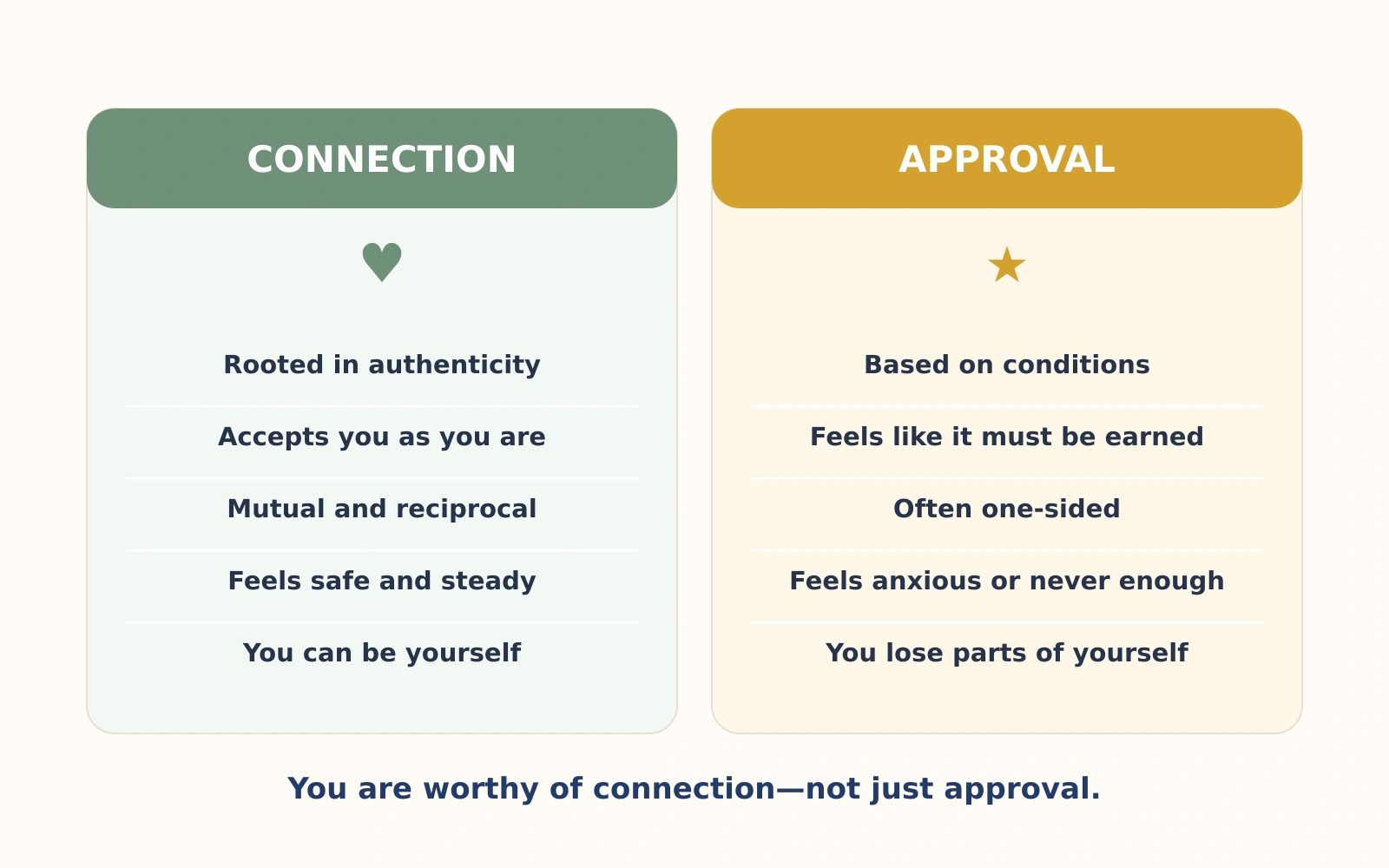
When approval replaces connection
If love, attention or safety once felt conditional, approval can begin to feel like belonging. You may monitor other people's moods, hide parts of yourself, avoid disagreement or work hard to be useful so that you will not be rejected.
But being accepted only when you are agreeable, productive or easy is not secure connection. Healthy connection has room for boundaries, difference, repair and honesty.
Building healthier connection
Begin with yourself
Notice your feelings, body signals, limits and needs without immediately judging or dismissing them.
Choose safety over intensity
Look for consistency, respect and reciprocity. Familiar intensity is not always the same as genuine closeness.
Practise small moments of honesty
Share something real, state a preference or ask for support with people who have shown they can respond with care.
Allow connection to grow slowly
Trust is built through repeated experiences. You do not have to rush intimacy or give everyone equal access to you.
Pause and reflect
- Where in my life do I feel most able to be myself?
- Do I seek connection, approval or a mixture of both?
- Which kind of connection—self, others, community or purpose—needs more care?
- What is one small, safe step toward connection I could take this week?
Next: Finding Belonging
Explore the difference between fitting in and being somewhere you can genuinely belong.
Continue to Finding Belonging →