


Healthy Dependence vs Independence
Healthy Dependence vs Independence
Healthy connection is not complete self-sufficiency or losing yourself in other people. It is interdependence: two whole people able to give, receive, lean and stand.
We are not meant to do everything alone
Independence can be empowering. It allows us to make choices, trust our abilities and take responsibility for our lives. But when independence becomes a rule—I must never need anyone—it can turn into protection from disappointment, rejection or loss of control.
At the other extreme, dependence can become unsafe when our identity, decisions, emotional stability or sense of worth rests almost entirely on another person. Healthy connection makes room for both autonomy and support.
Rigid independence
“I should cope alone.” Support may feel exposing, weak or unsafe. You may give easily but struggle to receive, hide distress and become exhausted before asking for help.
Unhealthy dependence
“I cannot cope without you.” You may hand over decisions, ignore your limits, tolerate poor treatment or feel responsible for keeping another person close.
Healthy independence
“I can think, choose and act for myself.” You trust your abilities, maintain your identity and take responsibility without closing yourself off from care.
Healthy interdependence
“We can support each other and remain ourselves.” Needs, care, influence, responsibility and vulnerability can move in both directions.
The Relationship Health Wheel
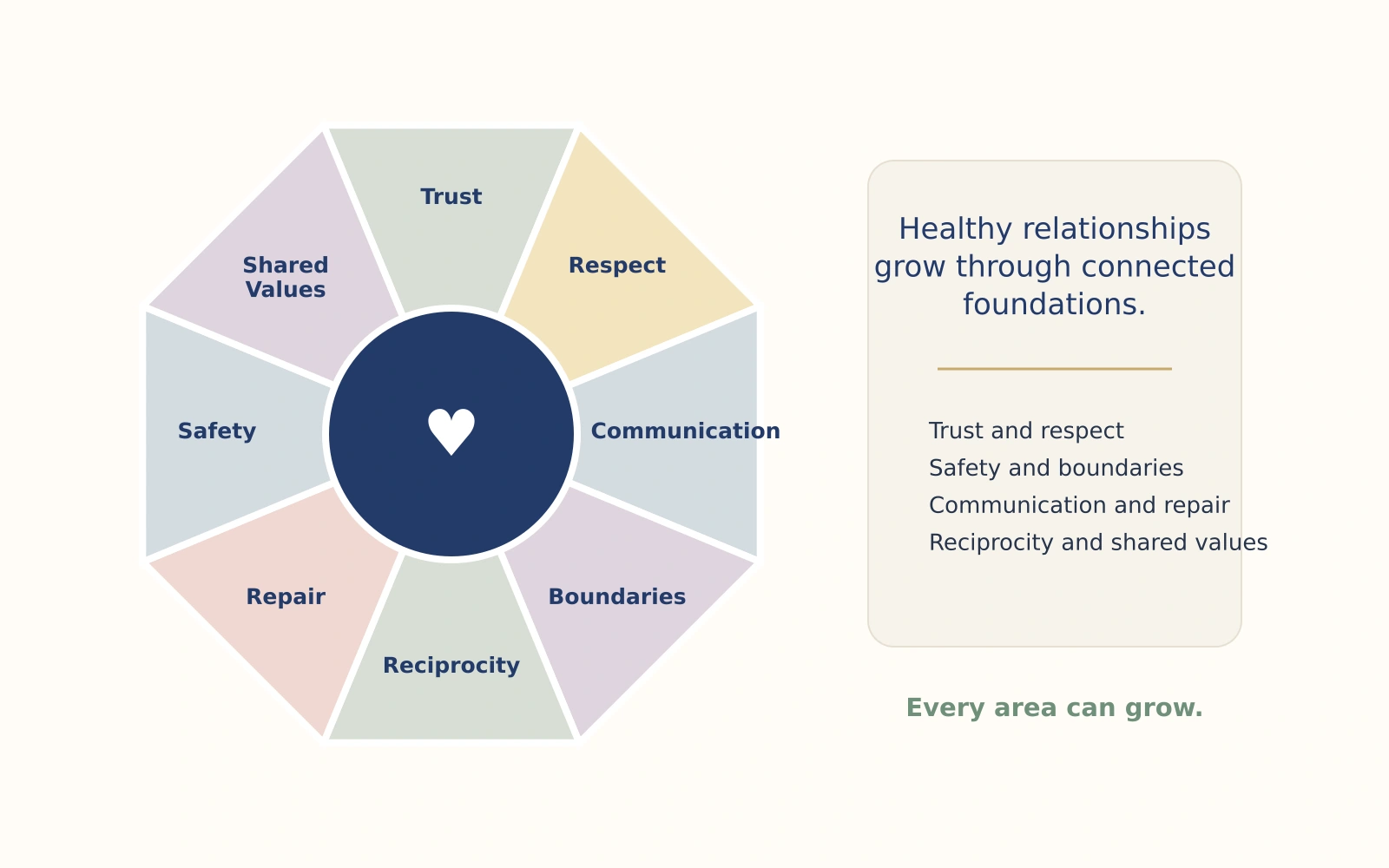
Interdependence is supported by trust, respect, communication, boundaries, reciprocity, repair, safety and shared values.
When helping becomes overfunctioning
Care becomes overfunctioning when you routinely manage what another capable person could manage, prevent them from experiencing consequences or carry their emotions as if they were your responsibility.
This can look loving while quietly creating exhaustion and resentment. Support says, “I am beside you.” Overfunctioning says, “I must do this for you or everything will fall apart.”
When self-reliance becomes isolation
Underfunctioning is not the only imbalance. Refusing all help can also keep relationships one-sided. People may know what you can do for them but never be allowed to know or support you.
Receiving is part of reciprocity. Letting a trustworthy person help does not erase your strength; it lets connection become mutual.
Connection Is Different from Approval
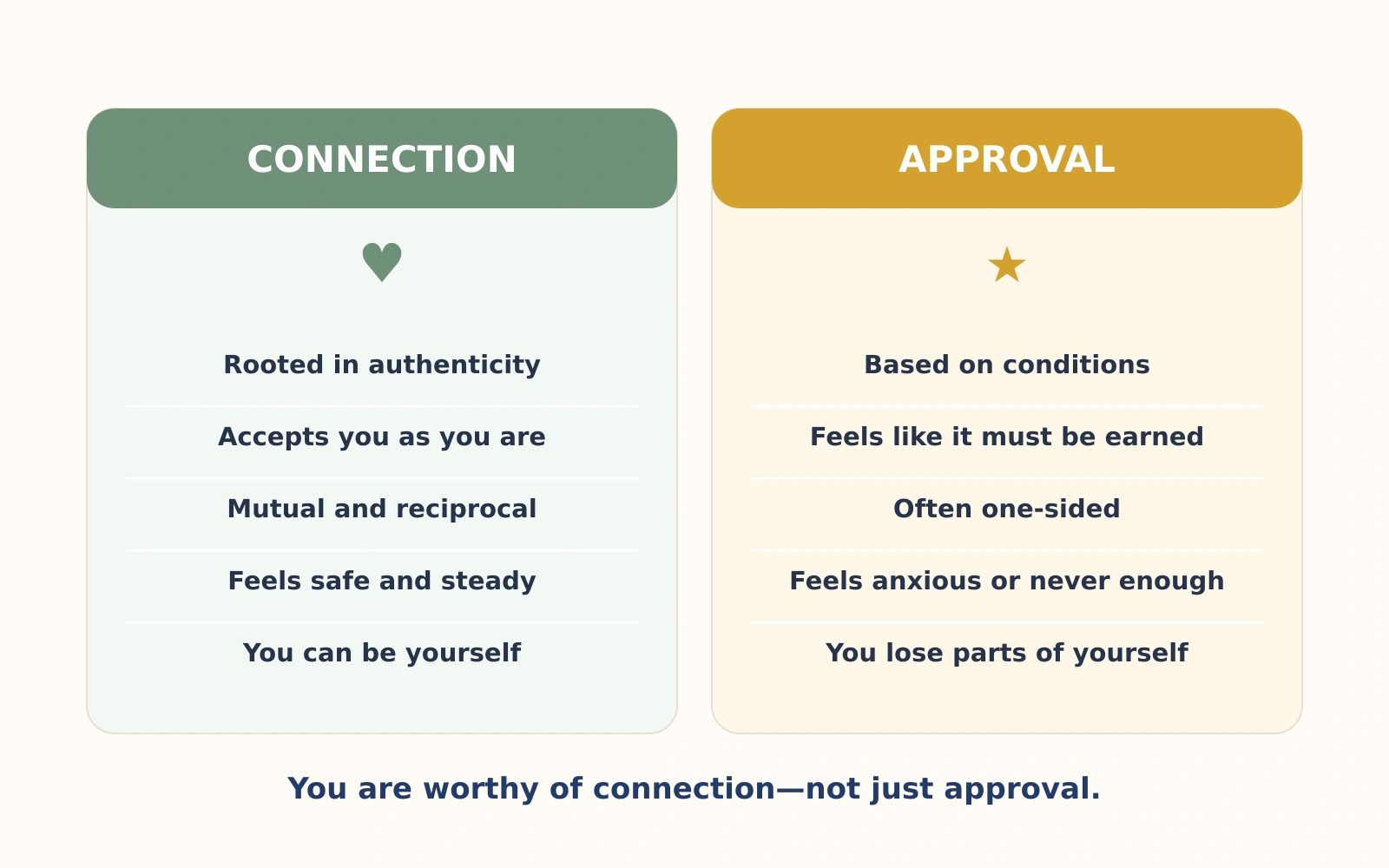
Interdependence keeps your identity intact. Approval-seeking makes belonging conditional on keeping others pleased.
Practising interdependence
Your balance check
- Where do I refuse help even when I need it?
- Where do I take responsibility for things that belong to someone else?
- Can I express a need without feeling ashamed or demanding?
- Do my closest relationships allow both closeness and individuality?
- What is one small way I could practise healthier give-and-take?
Next: Circle of Connection
Decide who belongs at each level of closeness—and let trust determine access.
Continue to Circle of Connection →