


Coping, Habits & Addiction

Coping Habits & Addiction
We all find ways to get through difficult moments. Sometimes a behaviour begins as relief — and gradually starts taking more than it gives.
If addiction or dependence is part of what you are experiencing, please get professional support.
Addiction is treatable, and you do not have to work through it using self-help alone. Doctors, alcohol and other drug services, counselling programs and specialist treatment services can help you understand your options and build a safer recovery plan.
If you may be physically dependent on alcohol, prescription medicines or another substance, seek medical advice before suddenly stopping. Withdrawal from some substances can require medical supervision.
Before asking “Why do I keep doing this?” ask “What does it do for me?”
Coping behaviours often have a function.
They may help reduce tension, create stimulation, avoid painful feelings, switch off, feel rewarded, connect socially or simply make it through a difficult day.
That does not mean every coping behaviour is unhealthy — or that every habit is an addiction. Understanding the function helps explain why simply telling ourselves to “stop” is often not enough.
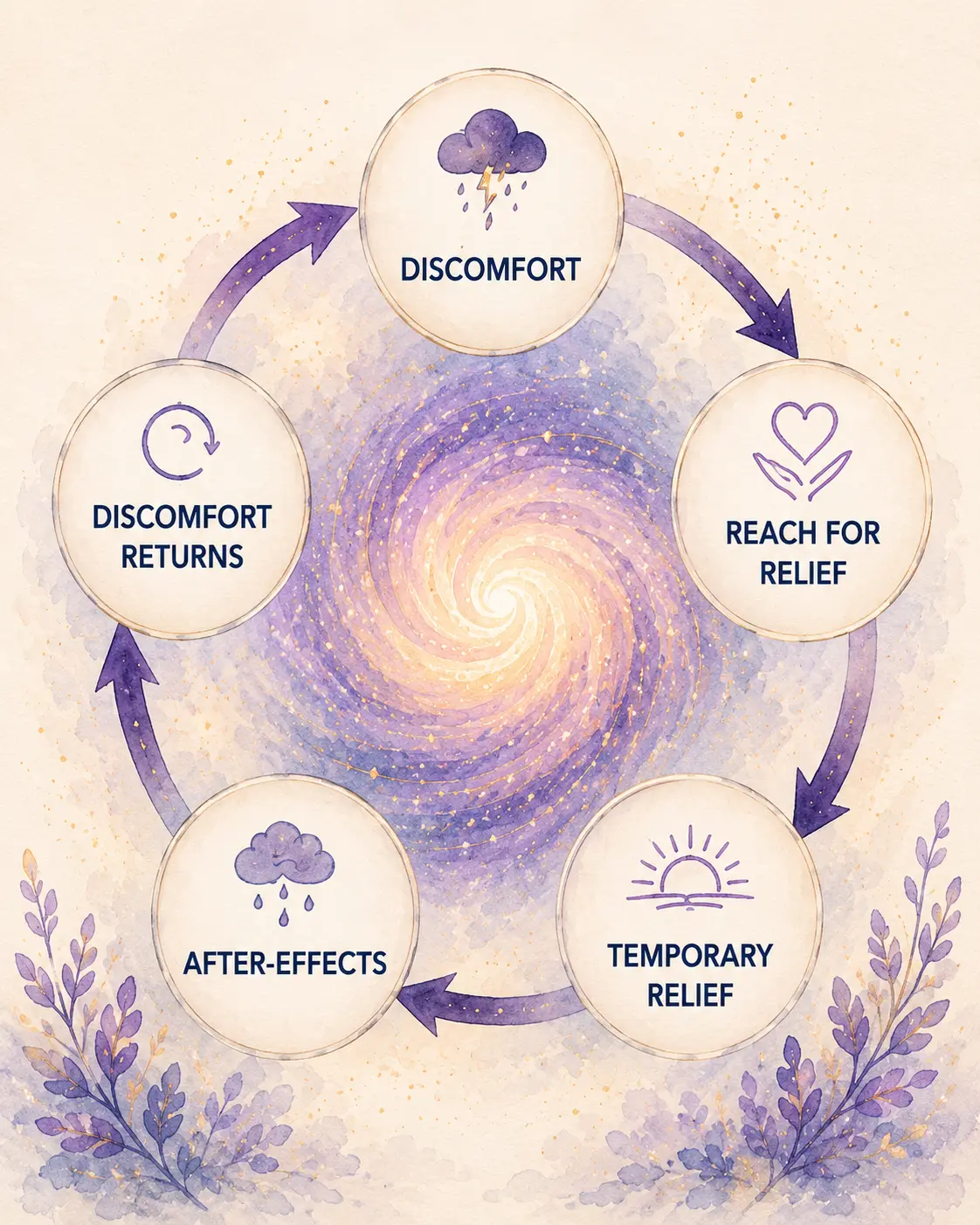

Why something can become very hard to stop.
When a behaviour reliably changes how we feel, it can become easier to reach for it again the next time discomfort appears.
Discomfort
Stress, boredom, loneliness, emotion, craving, exhaustion or another uncomfortable state appears.
Reach for relief
Your mind remembers something that has changed this feeling before.
Temporary relief
There may be pleasure, calm, stimulation, distraction, numbness or escape.
After-effects
The original problem may remain, or the behaviour may bring new consequences or discomfort.
Discomfort returns
The cycle becomes familiar, making the behaviour easier to reach for again.
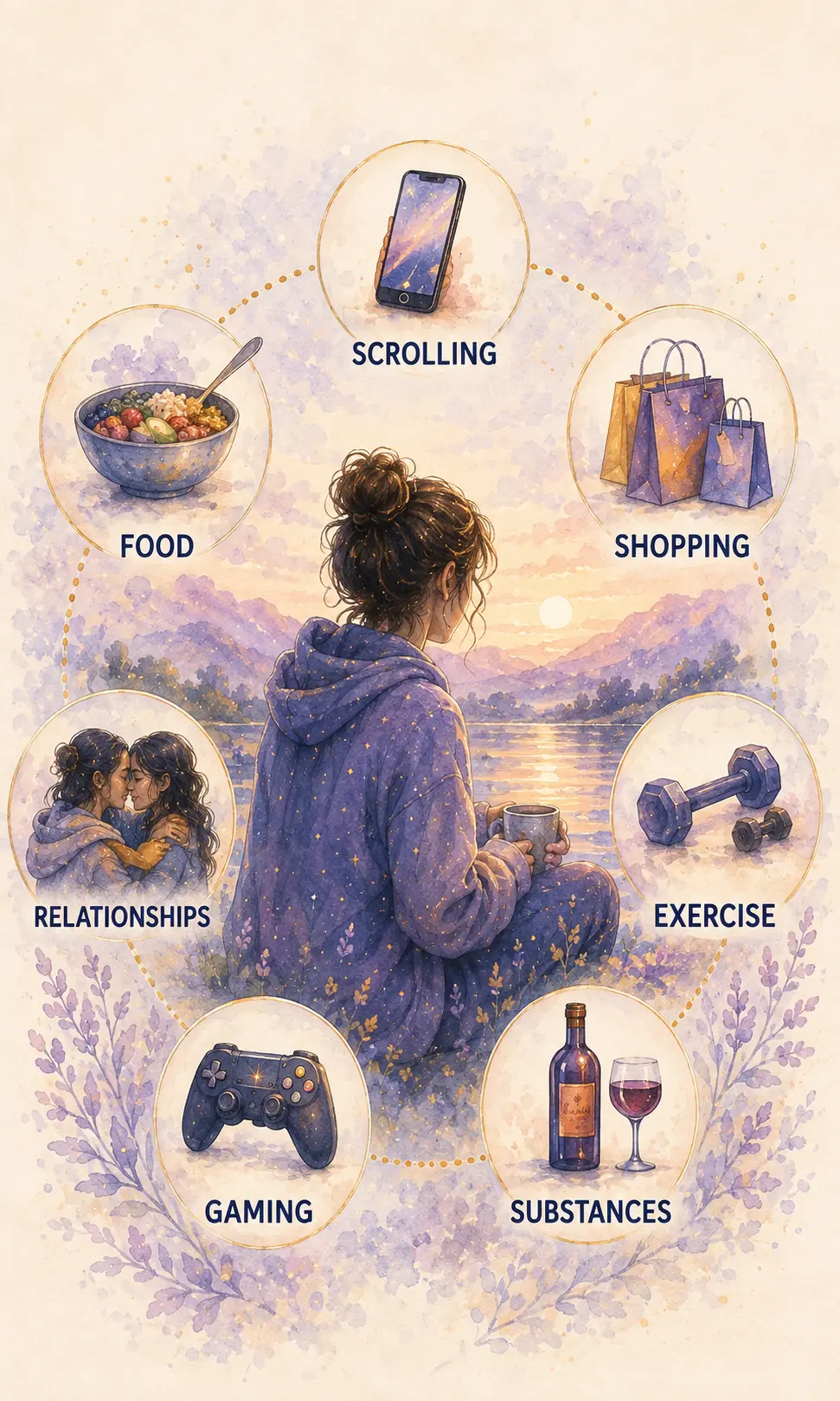
Coping is not only about substances.
Many behaviours can become automatic ways of changing how we feel.
A behaviour is not automatically unhealthy because you use it for comfort. The important questions are how much choice you have, what it costs you and whether it is creating harm.
A habit can change over time.
These are reflection points, not a diagnostic scale.
Choice
I enjoy this behaviour, but I can usually choose whether or not to do it.
Habit
I often do it automatically in particular situations without much thought.
Reliance
I increasingly depend on it to change how I feel or get through certain situations.
Loss of control
I find myself doing more than intended or struggling to reduce it despite wanting to.
Increasing harm
It is affecting health, money, relationships, responsibilities or safety, but stopping feels difficult.
Look underneath the behaviour.
Select anything that feels relevant. More than one reason may be true.
We will look at the need underneath it.
If the behaviour is doing a job, what else could help with that job?
The aim is not always to simply remove a behaviour. It may be to build more ways of meeting the need underneath it.
Calm
Movement, sensory reduction, breathing if comfortable, warmth, space, music or safe connection.
Stimulation
Movement, music, novelty, creativity, conversation or a change of environment.
Escape
A genuine break, fewer demands, entertainment, nature, rest or temporary distance from the problem.
Comfort
Food, warmth, sleep, connection, familiar routines or sensory comfort.
Reward
Build small enjoyable experiences into ordinary life rather than waiting until you are depleted.
Connection
Contact someone safe, spend time around people, join an activity or seek support.

You do not have to solve the whole pattern in this moment.
Sometimes the useful first step is creating a small amount of space between the urge and what happens next.
“I am having the urge to…”
What am I hoping will change if I do it?
Pause, move rooms, drink water, step outside or contact someone if that is safe and appropriate.
Can I meet even part of the underlying need another way?
Is the relief beginning to cost too much?
Control
Am I repeatedly doing more than I planned?
Time
Is this taking up increasing amounts of my day or attention?
Money
Is it causing financial strain, debt or secrecy?
Relationships
Am I hiding it, arguing about it or withdrawing from people?
Health
Is my physical or mental wellbeing being affected?
Responsibilities
Is it interfering with work, care, study or everyday tasks?
You do not have to wait until everything falls apart to get help.
Professional support can help if you are struggling to control alcohol, drugs, gambling or another behaviour; experiencing strong cravings; continuing despite significant harm; or finding that the pattern is affecting your health, relationships, finances, work or daily life.
Recovery support can include medical care, counselling, specialist addiction services, structured programs, peer support and help with the practical parts of rebuilding life.
Seeking support is also a form of regulation.Work with what is underneath the habit.
The goal is not to shame the coping strategy.
Understand what it has been doing for you — then build more ways to meet that need.