


Fight, Flight, Freeze & Fawn

Fight, Flight, Freeze & Fawn
When something feels threatening, overwhelming or uncertain, your system may move toward protection before you have time to consciously decide what to do.
These responses are not personality types.
Fight, flight, freeze and fawn describe broad patterns of protection that may appear when your system perceives threat, pressure or loss of safety.
You may recognise one response more strongly than the others, but people can move between several responses depending on the situation, relationship, environment and available capacity.
A protective response is not proof that you are dramatic, weak, difficult or incapable. It is information about how your system is trying to manage what feels important.
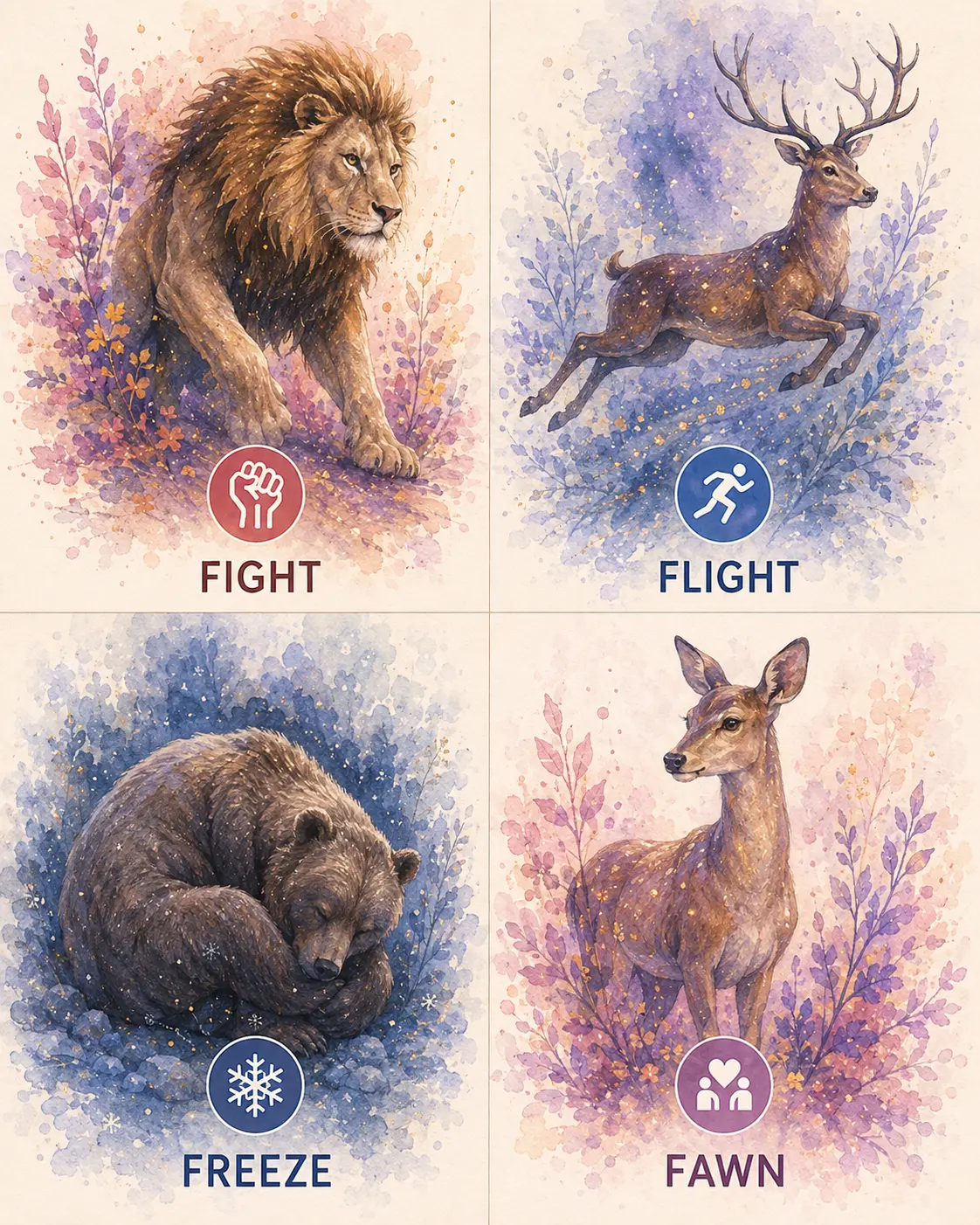
The same goal can produce very different behaviour.
Each response is attempting, in its own way, to move you toward greater safety or less threat.
Move against the threat
Fight energy can create urgency, anger, confrontation, defensiveness or a strong need to regain control.
- Arguing or challenging
- Becoming irritable or sharp
- Feeling heat or tension
- Needing action immediately
- Protecting boundaries forcefully
Move away from the threat
Flight energy can show up as escape, busyness, avoidance, restlessness or a powerful urge to leave.
- Wanting to get away
- Overworking or staying constantly busy
- Avoiding conversations
- Feeling restless or unable to settle
- Mentally rehearsing exits
Become still when action feels difficult
Freeze may involve feeling stuck, blank, uncertain or temporarily unable to act despite knowing something needs to happen.
- Mind going blank
- Difficulty speaking or choosing
- Feeling physically still or tense
- Procrastinating under pressure
- Watching rather than acting
Move toward safety through appeasing
Fawn responses may involve adapting quickly to another person's needs, mood or expectations in order to reduce conflict or maintain connection.
- Agreeing when you want to say no
- Monitoring another person's mood
- Overexplaining or apologising
- Trying to keep everyone happy
- Losing track of your own needs
What does protection tend to look like for you?
Choose anything you recognise. More than one response can be true.
The goal is awareness, not assigning yourself a fixed type.
Protective patterns can combine and change.
Fight then freeze
You react strongly, then later feel depleted, blank or unable to continue.
Fawn then resentment
You agree to keep the peace, then anger appears once your own needs become impossible to ignore.
Flight through busyness
Instead of physically leaving, you stay constantly occupied so there is little space to feel what is happening.
Freeze that looks like procrastination
A task may appear simple from the outside while internally your system feels unable to move toward it.
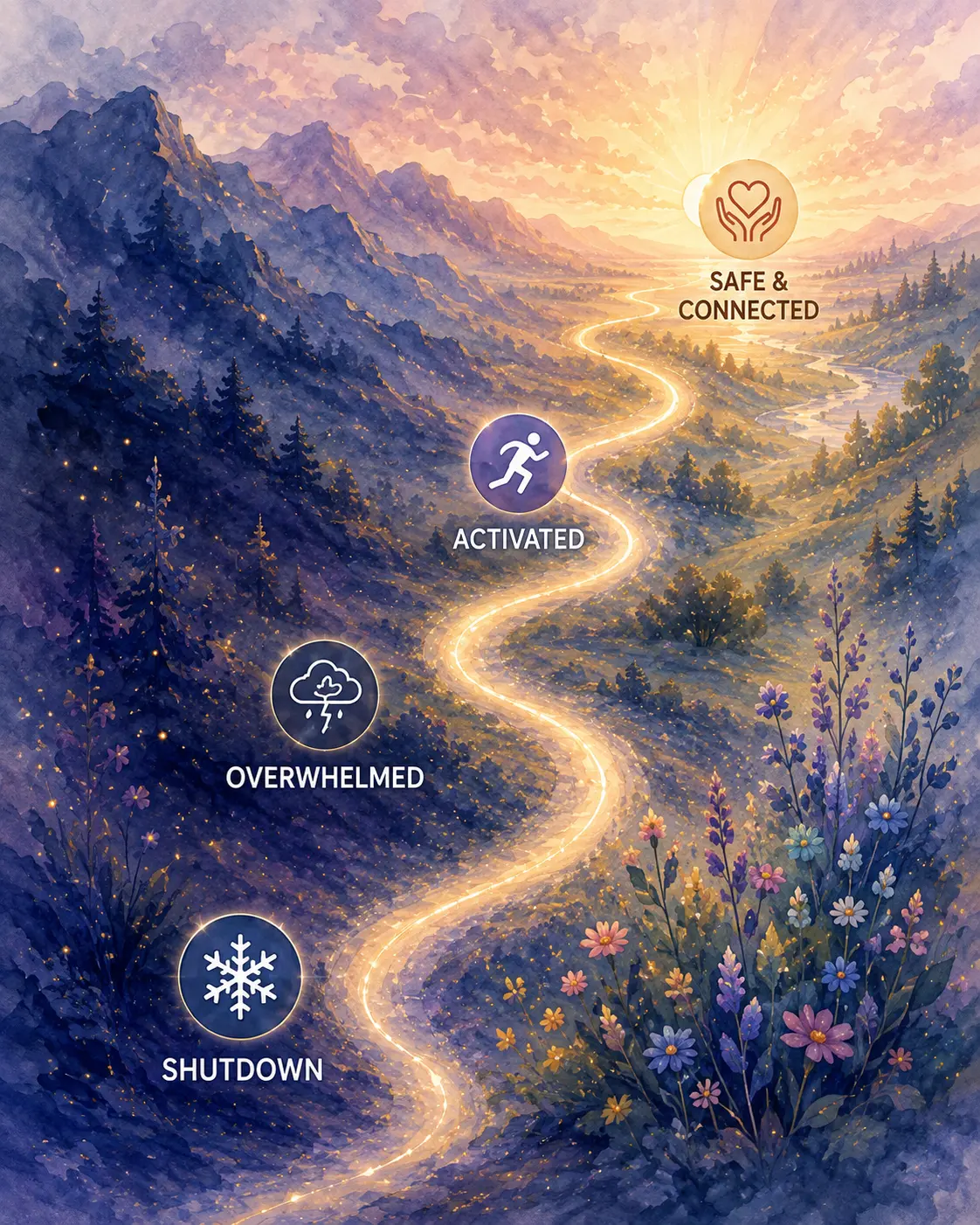
The goal is not to force the response away.
First notice the state. Then choose something that helps your system recognise there may be more options available now.
Notice
Name the response without turning it into a judgement.
Check safety
Ask whether something is genuinely unsafe or whether your system is responding to remembered threat.
Reduce intensity
Use distance, breathing, movement, grounding or sensory support where appropriate.
Reorient
Look around, notice the present environment and remind yourself what is true now.
Choose
When there is more space, decide what the situation genuinely requires.
Different responses may need different support.
Create space before action
Pause the conversation where possible, move some physical energy and wait until intensity has reduced before making major decisions.
Slow the urgency
Reduce unnecessary stimulation, orient to the present and decide whether you actually need to leave or simply need more space.
Make the next step very small
Reduce decisions, use gentle movement, name one physical action and consider supportive company rather than demanding immediate performance.
Reconnect with my own position
Delay automatic agreement, notice what you actually want and practise giving yourself time before answering.
Not every activated response needs to be regulated away.
If a situation involves genuine danger, intimidation, coercion, abuse or another real threat, your protective response may be signalling something important.
Regulation should support safer action — not teach you to tolerate genuinely unsafe circumstances.
Follow what you noticed.
You do not have to solve the whole pattern today.
Notice one response, one signal and one supportive next step.