


Finding Belonging
Finding Belonging
Belonging is more than being included. It is the feeling that there is room for the real you—and that you do not have to disappear to keep your place.
What belonging really means
We can be surrounded by people and still feel as though we are standing outside the circle. True belonging is not simply access to a group. It is the experience of being welcomed, valued and able to participate without continually proving your worth.
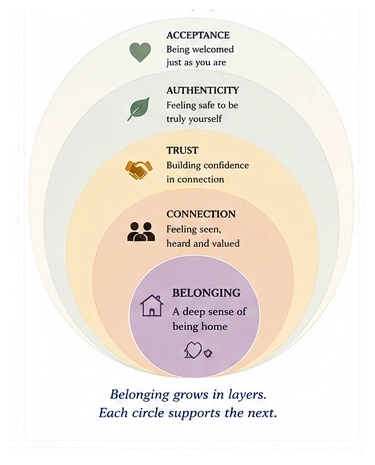
Belonging includes connection, trust, authenticity and acceptance. It grows when we can bring more of ourselves into a relationship or community and discover that we are still safe there.
Belonging allows, “This is who I am.”
The Belonging Circle
Belonging grows through connection, trust, authenticity and acceptance.
Why belonging can feel difficult
Early exclusion, criticism, unpredictable care, bullying, discrimination or repeated experiences of being misunderstood can teach us that being ourselves is risky. We may enter new spaces already expecting rejection.
Sometimes the fear of not belonging becomes so strong that we reject ourselves first: staying quiet, keeping distance or deciding that nobody would understand.
Masking and fitting in
Masking means hiding or changing natural parts of yourself to appear acceptable. It can involve rehearsing conversations, copying others, suppressing emotions or concealing needs and neurodivergent traits.
Masking may help us navigate unsafe or inflexible environments, but doing it constantly can be exhausting. Being liked while heavily masked can also feel lonely because the acceptance does not seem to belong to the real you.
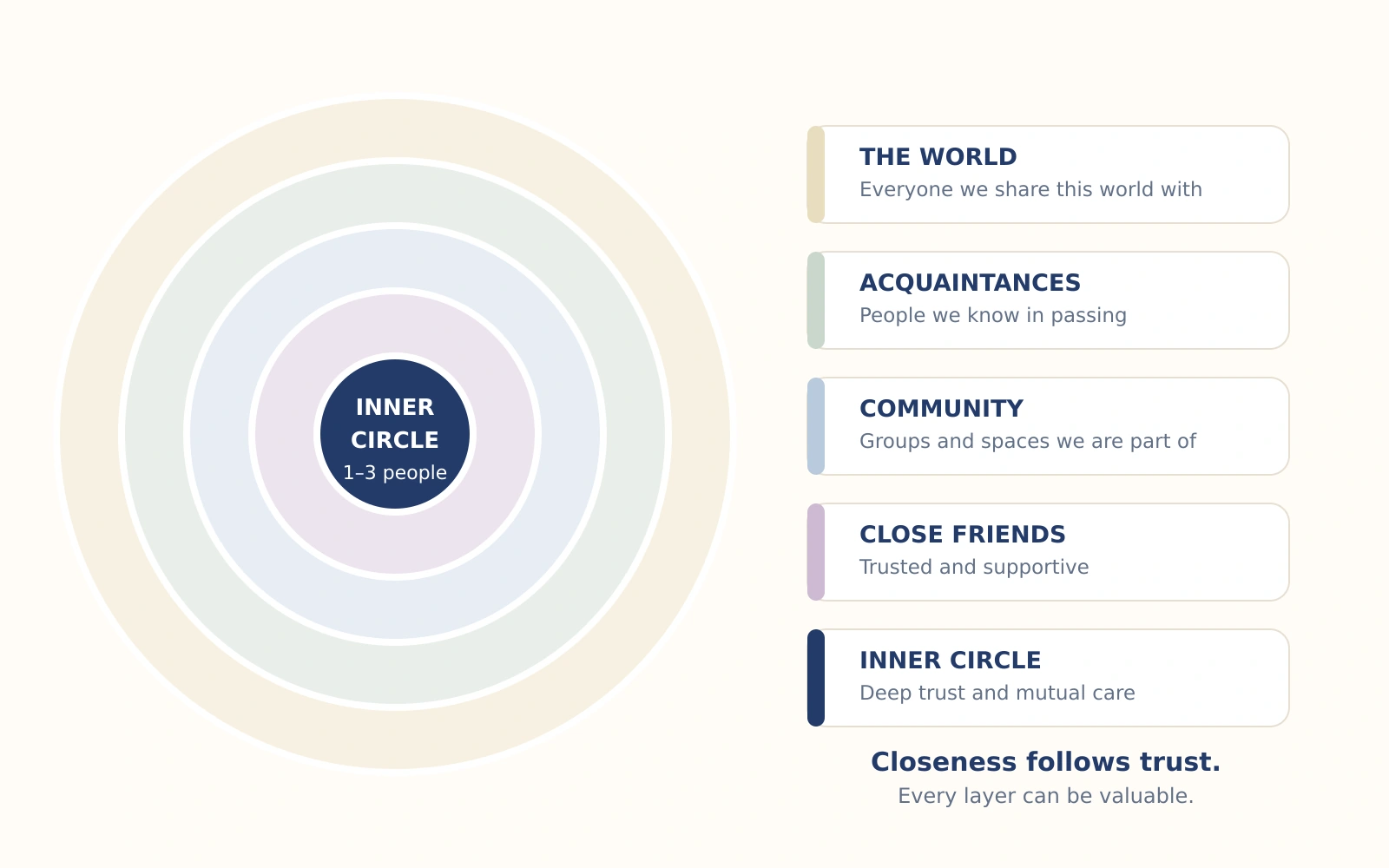
Your Circle of Connection
Not every relationship needs the same level of closeness. Different connections can meet different needs.
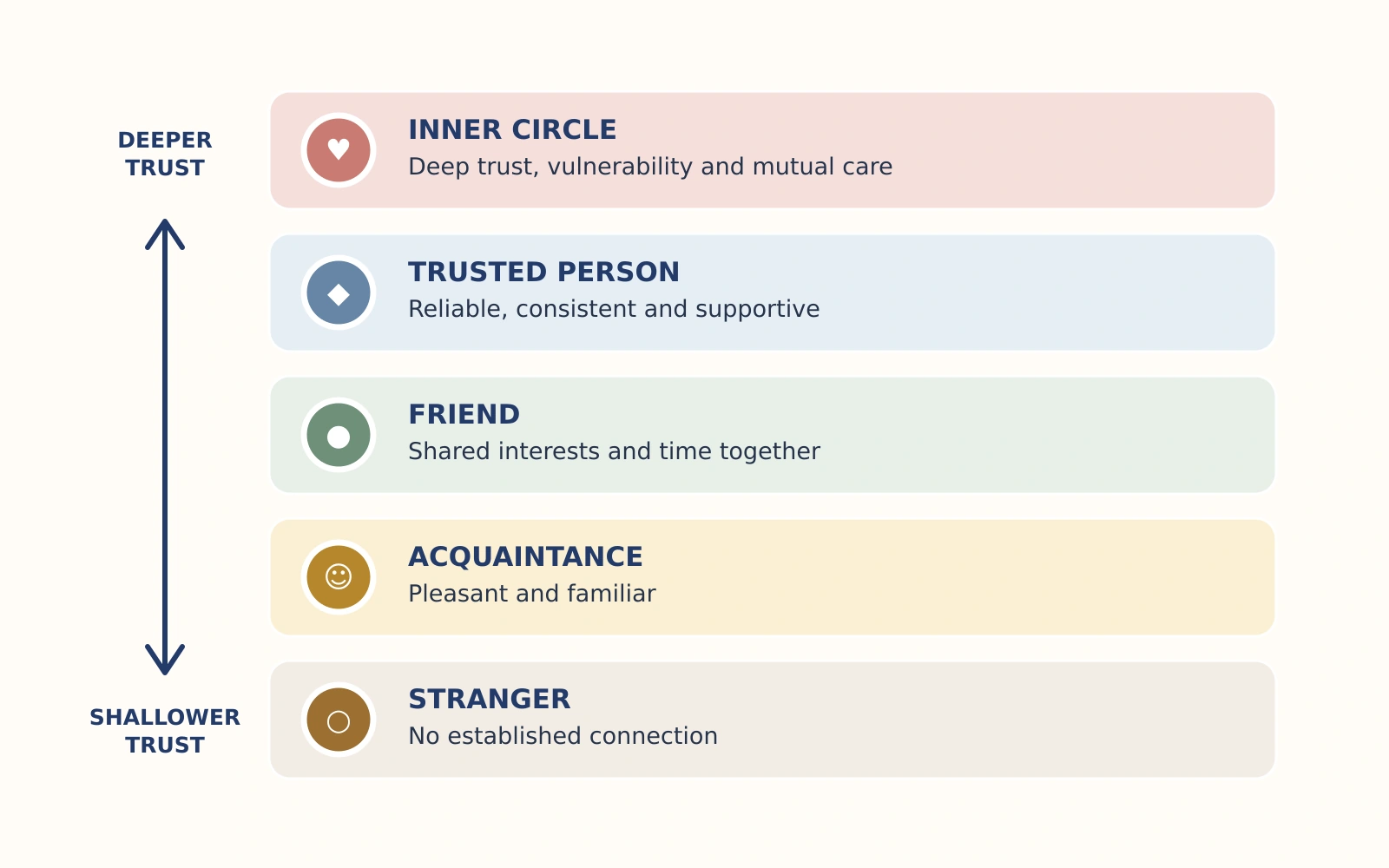
The Trust Ladder
Let access grow with evidence. Trust can deepen gradually rather than being given all at once.
Finding your people
Your belonging check-in
- Where do I feel most able to relax and be myself?
- Where am I included but still feel I must perform?
- Which people respond well when I express a need or difference?
- What kind of community would feel meaningful to me?
- What is one low-pressure way I could move closer to it?
Next: Understanding Loneliness
Learn why loneliness hurts and what different kinds of loneliness may be asking for.
Continue to Understanding Loneliness →