


Understanding Loneliness
Understanding Loneliness
Loneliness is not proof that something is wrong with you. It is the painful signal that the connection you need and the connection you have do not currently match.
Why loneliness hurts
Because humans evolved in groups, disconnection can register as threat. Loneliness can affect mood, sleep, concentration, energy and the way we interpret social situations. When it lasts, we may become more watchful for rejection—making it harder to risk the very connection we need.
Loneliness is not always solved by being around more people. We can feel lonely in a crowded room, a family, a friendship or a relationship when we do not feel known, understood or emotionally met.
The Many Faces of Loneliness
Understanding the kind of connection that is missing can make the next step clearer.
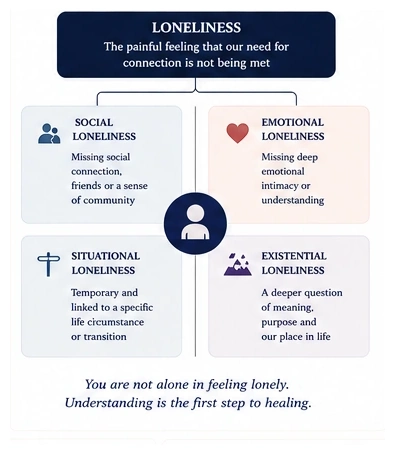
Social loneliness
You may lack a group, community or network where you feel included. The need may be for shared activity, regular contact or a wider circle.
Emotional loneliness
You may know many people but miss deep emotional understanding, intimacy or someone with whom you can be fully honest.
Situational loneliness
A move, separation, bereavement, illness, new job, caregiving role or life transition may have disrupted familiar connection.
Existential loneliness
You may feel alone in your inner world or disconnected from meaning, purpose, faith or a sense of place in life.
Loneliness after hurt or trauma
When closeness has led to criticism, betrayal, control or abandonment, part of you may long for connection while another part works hard to prevent it. This push and pull can feel confusing.
Withdrawal may have protected you. Reconnection does not require abandoning that protection overnight. It means helping your system learn—through small, safer experiences—that not every relationship will repeat the past.
When loneliness changes how we think
Loneliness can make neutral moments feel personal: a delayed reply becomes rejection, an awkward conversation becomes evidence that we do not fit, and one disappointing interaction seems to predict every future one.
Pause before treating the first painful interpretation as fact. Ask what else might be true and whether you need reassurance, clarity, rest or a different kind of connection.
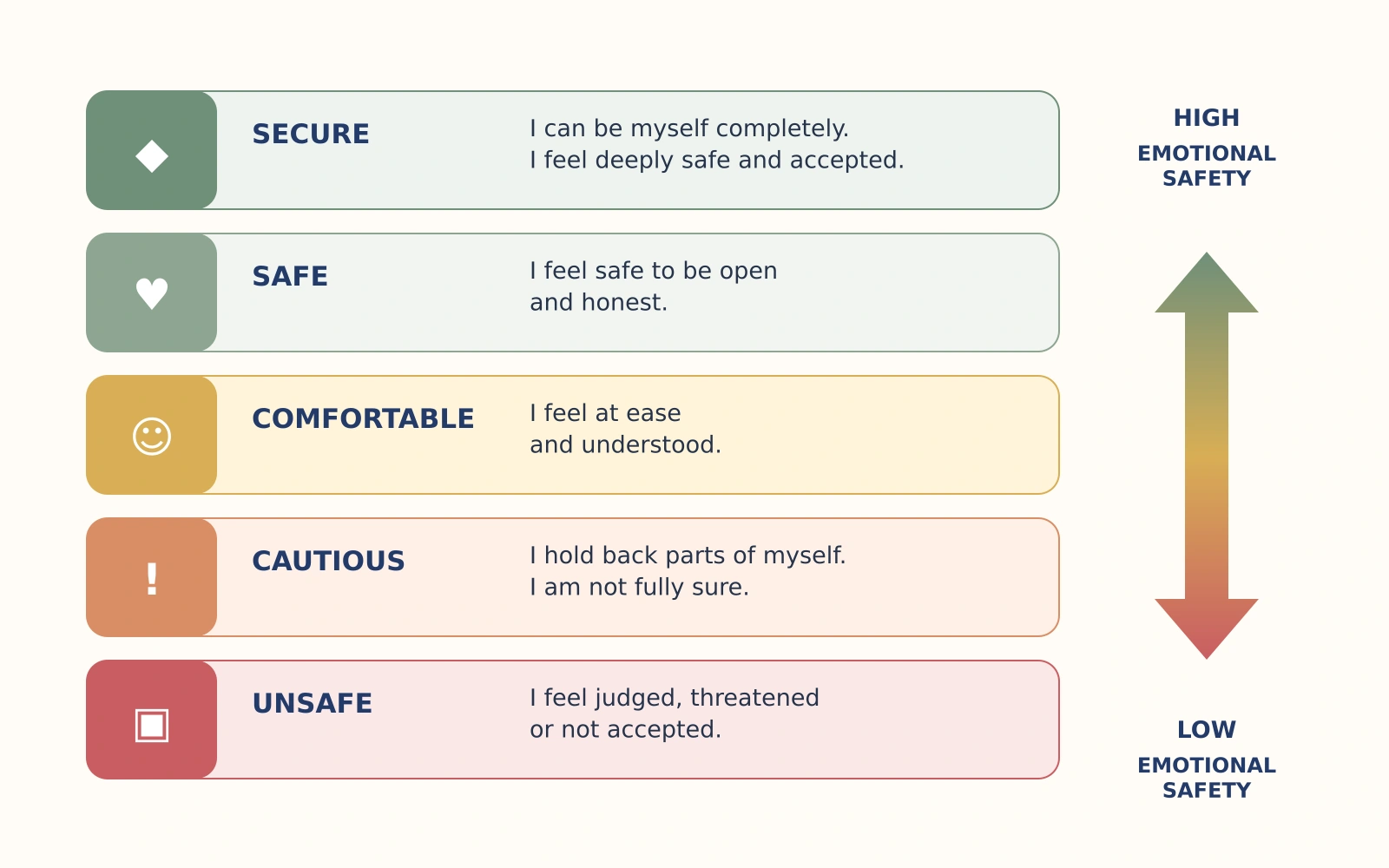
Emotional Safety Matters
Connection becomes nourishing when you can move toward honesty without feeling judged, threatened or erased.
Gentle ways to reconnect
Lower the pressure
Choose brief, structured contact: a class, walking group, online community, volunteering session or regular café visit.
Return to familiar people
A simple “I’ve been quiet lately, but I’d like to reconnect” can reopen a door without requiring a perfect explanation.
Build regularity
Repeated small contact often creates more belonging than waiting for one instant, intense friendship.
Include purpose
Creative work, spirituality, nature, caring for others and meaningful contribution can soften existential loneliness.
What is your loneliness asking for?
- Do I need more people, or do I need deeper honesty with someone already here?
- Is my loneliness social, emotional, situational, existential—or a mixture?
- What makes reaching out feel unsafe or difficult?
- Who has shown consistency, warmth or genuine interest?
- What is one small form of contact that feels possible, not overwhelming?
Next: Understanding Attachment
Explore how early patterns can shape closeness—and how greater security can be built.
Continue to Understanding Attachment →