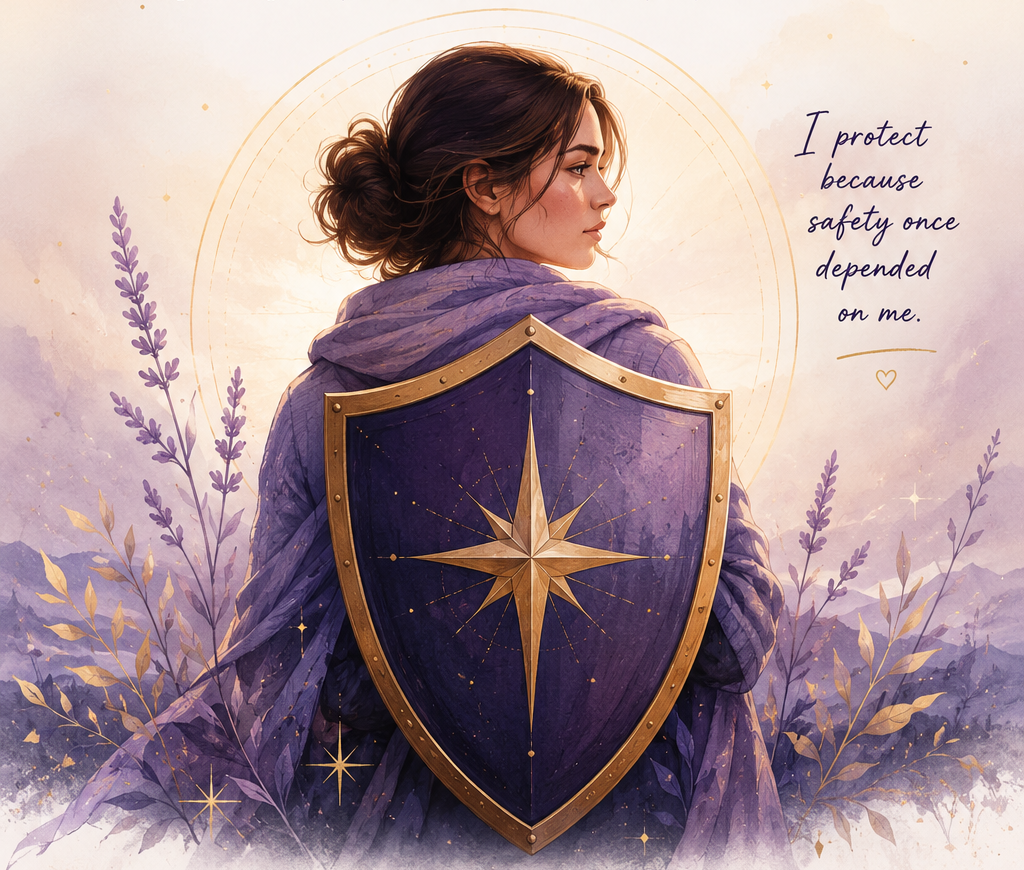
The different ways we learn to stay safe are not personality flaws.
They are protective patterns shaped by experience, emotion and the
nervous system.
Have you ever wondered why you react so differently from someone else
when life becomes stressful?
One person may become highly organised and take control.
Another may avoid the situation completely.
Someone else may focus on keeping everybody happy, while another
person may become quiet, disconnected or unable to respond.
These reactions do not necessarily reveal who you are at your core.
They may reveal how your mind and body have learned to protect you.
Over time, repeated protective responses can begin to feel like part
of your identity.
We call this your Protector Type.
What Is a Protector Type?
A Protector Type is the protective pattern you are most likely to
use when you feel stressed, uncertain, criticised, rejected,
overwhelmed or emotionally unsafe.
It is not a diagnosis, a permanent label or a complete description
of your personality.
It is a way of understanding the automatic strategies your nervous
system may use to restore safety.
Your Protector Type is not who you are. It is something you
learned to do.
Why Do We Develop Protective Patterns?
Human beings are designed to adapt.
From the earliest stages of life, we learn which behaviours help us
maintain connection, reduce conflict, receive approval or avoid pain.
These lessons do not always arrive as conscious thoughts. They are
often learned through repetition.
1
Something Feels Unsafe
Your body detects tension, uncertainty, criticism, disconnection
or the possibility of emotional pain.
2
You Find a Way to Cope
You act, withdraw, adapt, manage, overthink or disconnect in a way
that helps you feel more protected.
3
The Pattern Becomes Automatic
When the response appears to work, your nervous system becomes
more likely to use it again in a similar situation.
Eventually, you may respond in the same way before you have consciously
considered what is happening.
The reaction can feel immediate because your body is attempting to
protect you faster than your logical mind can analyse the situation.
Your protective pattern may begin working before you even realise
you feel unsafe.
Protection Can Take Many Forms
Not every protective response looks fearful.
Some patterns can look capable, helpful, independent, calm or highly
productive from the outside.
✦
Taking control can create a sense of certainty.
✦
Staying busy can prevent difficult feelings from surfacing.
✦
Keeping others happy can reduce the risk of conflict.
✦
Withdrawing can reduce stimulation and emotional pressure.
✦
Overthinking can create the feeling of being prepared.
✦
Appearing unaffected can protect vulnerable emotions.
Your Protector Is Not Trying to Sabotage You
Protective patterns are often criticised because of the difficulties
they can create in adult life.
You may become frustrated with yourself for shutting down, becoming
defensive, avoiding decisions, overworking or worrying about what
everybody thinks.
But these responses did not develop because your mind or body wanted to
make life harder.
They developed because some part of you believed they were necessary.
Perhaps staying alert helped you anticipate someone’s mood.
Perhaps being useful helped you feel valued.
Perhaps staying quiet helped you avoid conflict.
Perhaps taking control reduced uncertainty.
Perhaps becoming independent protected you from disappointment.
Perhaps disconnecting helped you tolerate overwhelming emotions.
Understanding this does not mean every reaction is healthy or that
harmful behaviour should be excused.
It means change becomes easier when it begins with understanding rather
than shame.
Why Protective Patterns Are Often Misunderstood
Other people usually see the behaviour. They do not always see the fear,
pressure or vulnerability underneath it.
Control May Hide Uncertainty
What looks demanding may be an attempt to reduce fear and
unpredictability.
Avoidance May Hide Overwhelm
What looks unmotivated may be a nervous system struggling with
pressure or emotional overload.
Independence May Hide Disappointment
What looks self-sufficient may have developed from learning that
support was unreliable.
Agreeableness May Hide Fear
What looks endlessly kind may be an attempt to prevent rejection,
anger or conflict.
Anger May Hide Vulnerability
What looks confrontational may be protecting hurt, fear or a sense
of powerlessness.
Disconnection May Hide Intensity
What looks uncaring may be a response to emotions that feel too
powerful to process in the moment.
The behaviour people see is not always the full story of what your
nervous system is experiencing.
You May Have More Than One Protective Pattern
Human behaviour is complex.
You may respond one way at work and another way in close
relationships.
You may become highly capable during a crisis, then withdraw once the
immediate pressure has passed.
You may adapt differently depending on who you are with, what is at
stake and how safe you feel.
A Protector Type is not intended to place you into a rigid box.
It offers a starting point for recognising the pattern that may be
most active in your life right now.
Why Awareness Matters
When you do not understand a protective response, it is easy to believe
the reaction is simply your personality.
You may tell yourself:
“I am just an anxious person.”
“I have always been difficult.”
“I am too sensitive.”
“I cannot rely on anybody.”
“I always ruin things.”
“This is simply who I am.”
Awareness creates a little space between you and the pattern.
Instead of automatically judging yourself, you can become curious.
“What happened just before I reacted?”
“What felt unsafe in that moment?”
“What was I trying to prevent?”
“What did my body believe it needed to do?”
“What might help me feel safer now?”
These questions do not make the response disappear immediately.
They help you begin meeting it with understanding.
Your Pattern Is Not Your Identity
One of the most important things to remember is that your protective
response is not the whole of who you are.
Beneath the pattern, there may be creativity, softness, courage,
curiosity, playfulness, confidence and connection that have not always
felt safe to express.
The goal is not to destroy the protector.
The goal is to help it recognise that it does not have to manage every
moment of your life.
Your Protector Was Created for a Reason
Your protective responses are not proof that you are broken.
They are evidence of a mind and body that learned how to adapt.
Some patterns may no longer serve you in the way they once did.
But understanding them allows you to create change without turning
against yourself.
You are not the pattern. You are the person who learned the pattern
in order to feel safe.
Discover Your Protective Pattern
What Is Your Protector Type?
Take the quiz to explore the protective pattern you may rely on
during stress, uncertainty or emotional pressure.
Your result is not a diagnosis or a permanent label. It is a gentle
starting point for understanding how you learned to stay safe.
You feel a sudden knot in your stomach. A thought enters your mind: something is wrong.Is it anxiety creating another frightening possibility?Or is it your intuition trying to draw your attention towards something important?The difference is not always obvious.
You’re Not Broken — You’re Responding Exactly as You Learned ToThe reactions you judge most harshly may be the same responses that once helped you feel safer, more accepted or more in control.
I think one of the biggest misconceptions about personal growth is that the first thing we need to do is heal. We are told to let go, forgive, move forward, break the pattern and become a better version of ourselves. We start reading books, listening to podcasts, taking quizzes, journalling and searching for the thing that will finally help us feel different.