


Your Support Network

Support works best as a network, not a single lifeline.
Different people, places and resources can help with different parts of being human.
One person cannot be everything.
It is natural to turn first to the person we trust most. But expecting one partner, friend or family member to provide all emotional, practical, social, spiritual and professional support can place enormous pressure on the relationship.
A strong network does not require dozens of close friends. It means knowing where different forms of support can come from and having more than one pathway toward help, companionship and understanding.
Different needs call for different kinds of support.
A healthy network gives you more than one place to turn.
Emotional Support
People who can listen, validate, stay present and make room for feelings without immediately fixing or judging.
Practical Support
Help with tasks, transport, meals, childcare, appointments, technology or the everyday load when capacity is low.
Informational Support
People or services with relevant knowledge who can explain options and help you make informed decisions.
Professional Support
Qualified care for needs beyond what friends and family can safely or appropriately hold.
Social Support
Companionship, shared interests, laughter and regular contact that create connection beyond crisis.
Meaning and Spiritual Support
People, practices or communities that reconnect you with values, faith, nature, creativity, identity or purpose.

Not every relationship needs the same level of closeness. A healthy network can include different circles of connection.
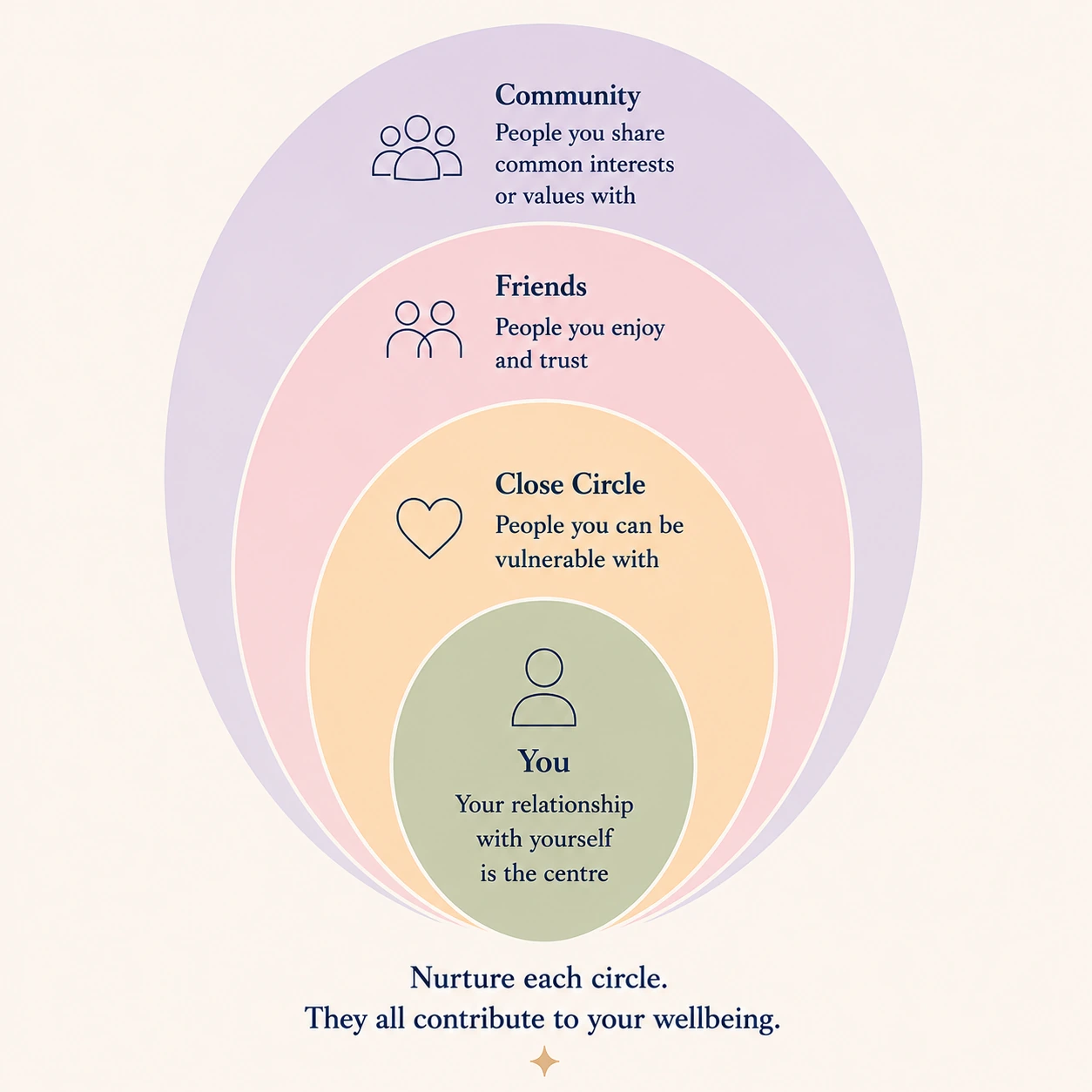
Before sharing deeply, notice how safe you feel and what level of openness the relationship can currently hold.
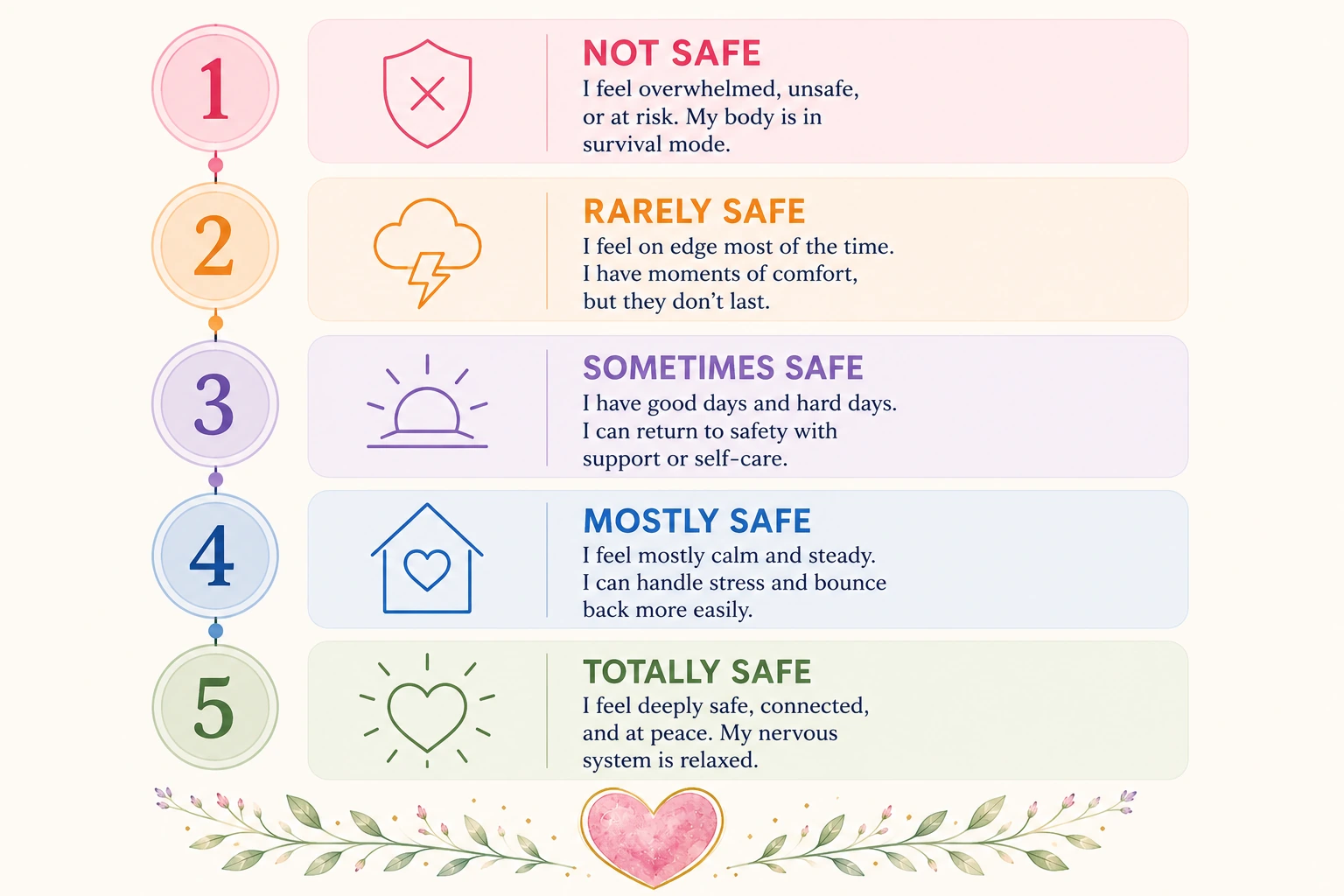
Needs can feel risky.
You may have learned that needs burden people, that help comes with strings attached or that disappointment is less painful if you never ask.
You may also assume others should notice what you need without being told.
Make the request specific.
Instead of “I need support,” try: “Could you listen for ten minutes without giving advice?”
Or: “Can you drive me to this appointment?” “Would you check in with me on Friday?”

Match the request to the relationship. An acquaintance may offer practical help; an inner-circle person may hold deeper vulnerability.
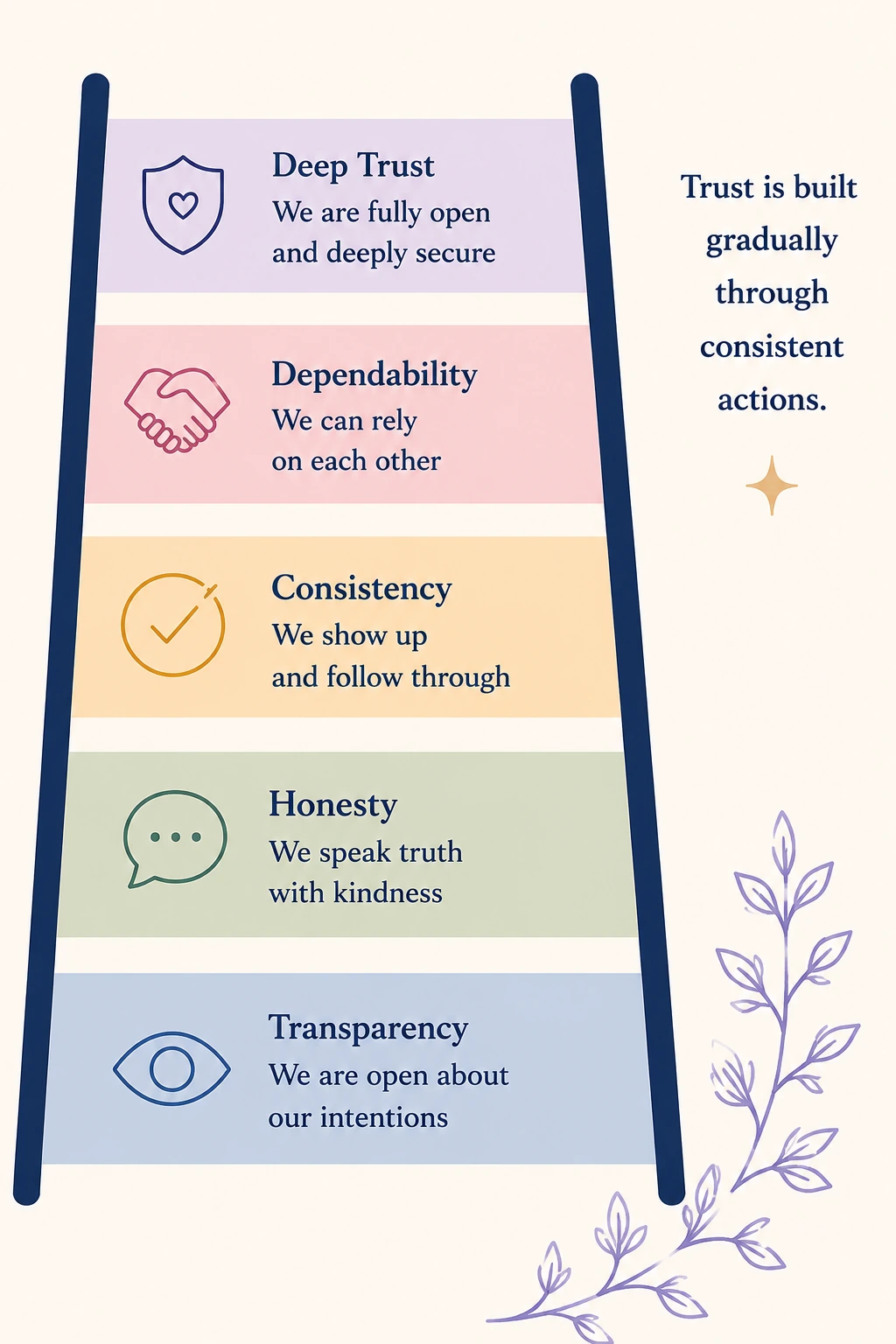
Small connection creates stronger pathways later.
Support networks are easier to use when connection exists before everything becomes urgent.
Small regular contact, shared activities, mutual offers of help and honest conversations create pathways that are available when life becomes difficult.
Support should also include care that is not centred on problems. Joy, play, ordinary conversation and shared purpose are part of what makes a network sustaining.
Create your support map.
- Who can listen without trying to control the outcome?
- Who is reliable with practical help?
- Which professional or community resources could I use?
- Where do I experience companionship, meaning or shared interest?
- Which area has only one support person — or no current pathway?
- What is one relationship or resource I can gently strengthen now?
Support can come from more than one place.
Friends and family can care deeply without having the skills to manage every situation. Professional or crisis support is appropriate when safety, severe distress or complex health needs are involved.